WETEC
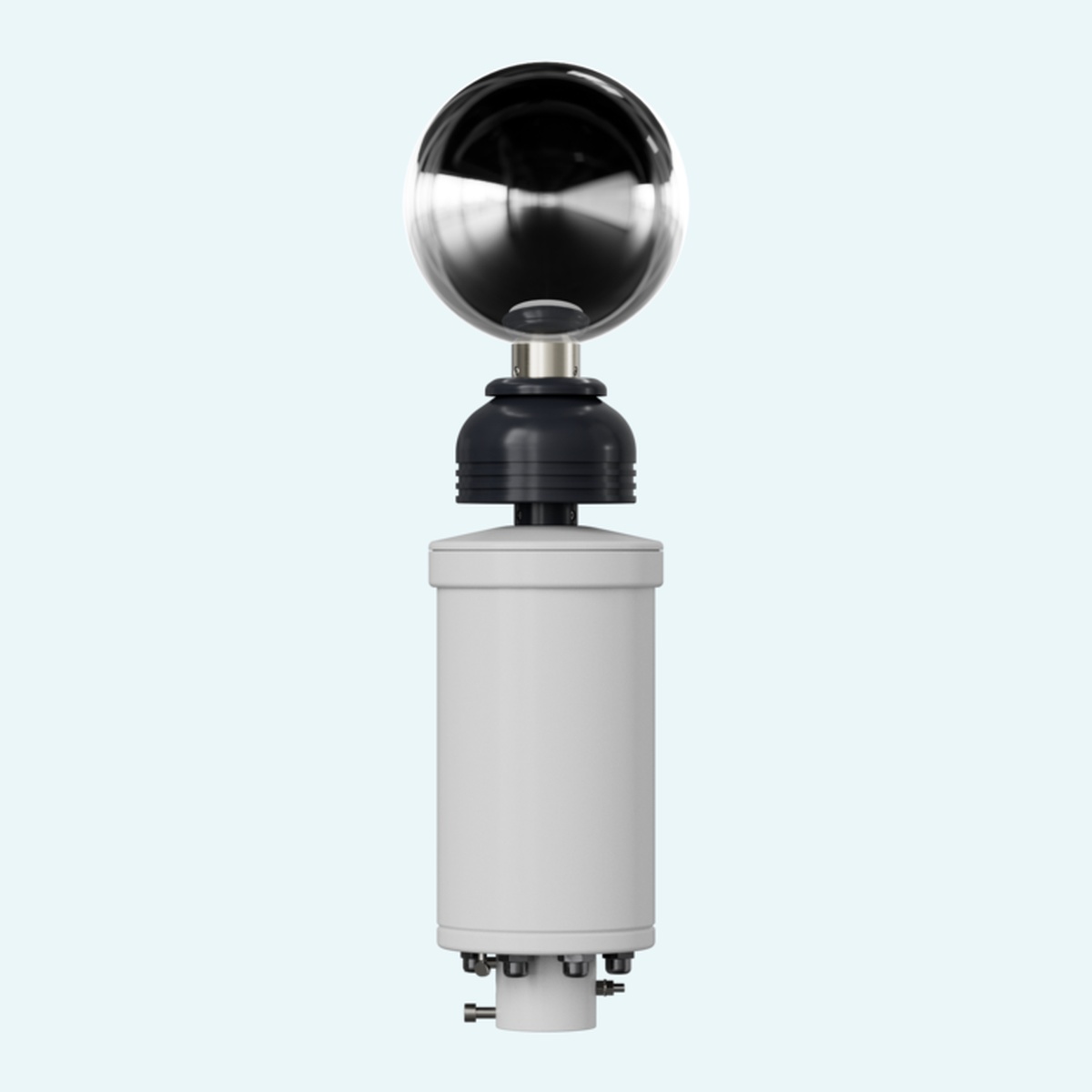
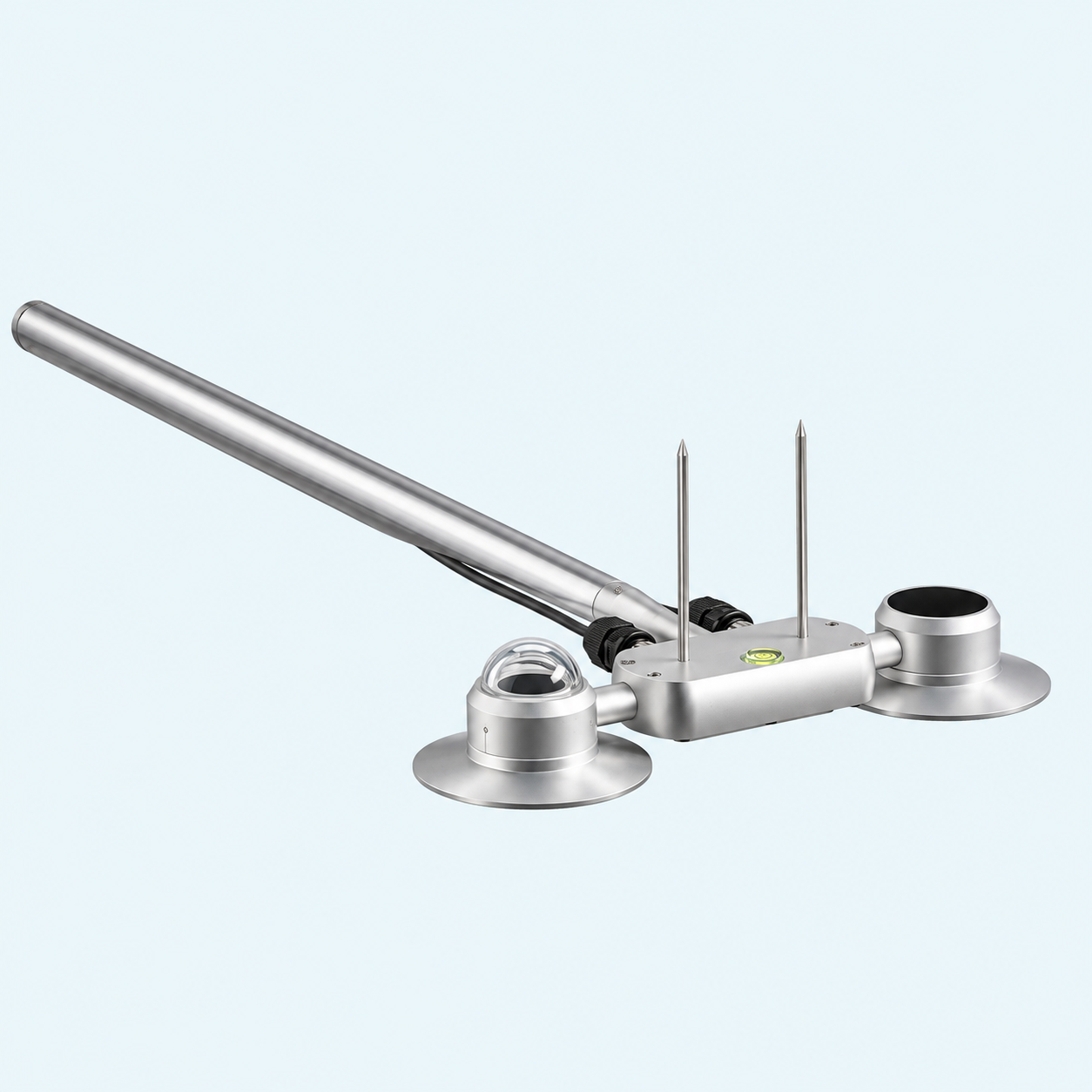
LPNET14 4-Component Net Irradiance Meter thumbnail 1
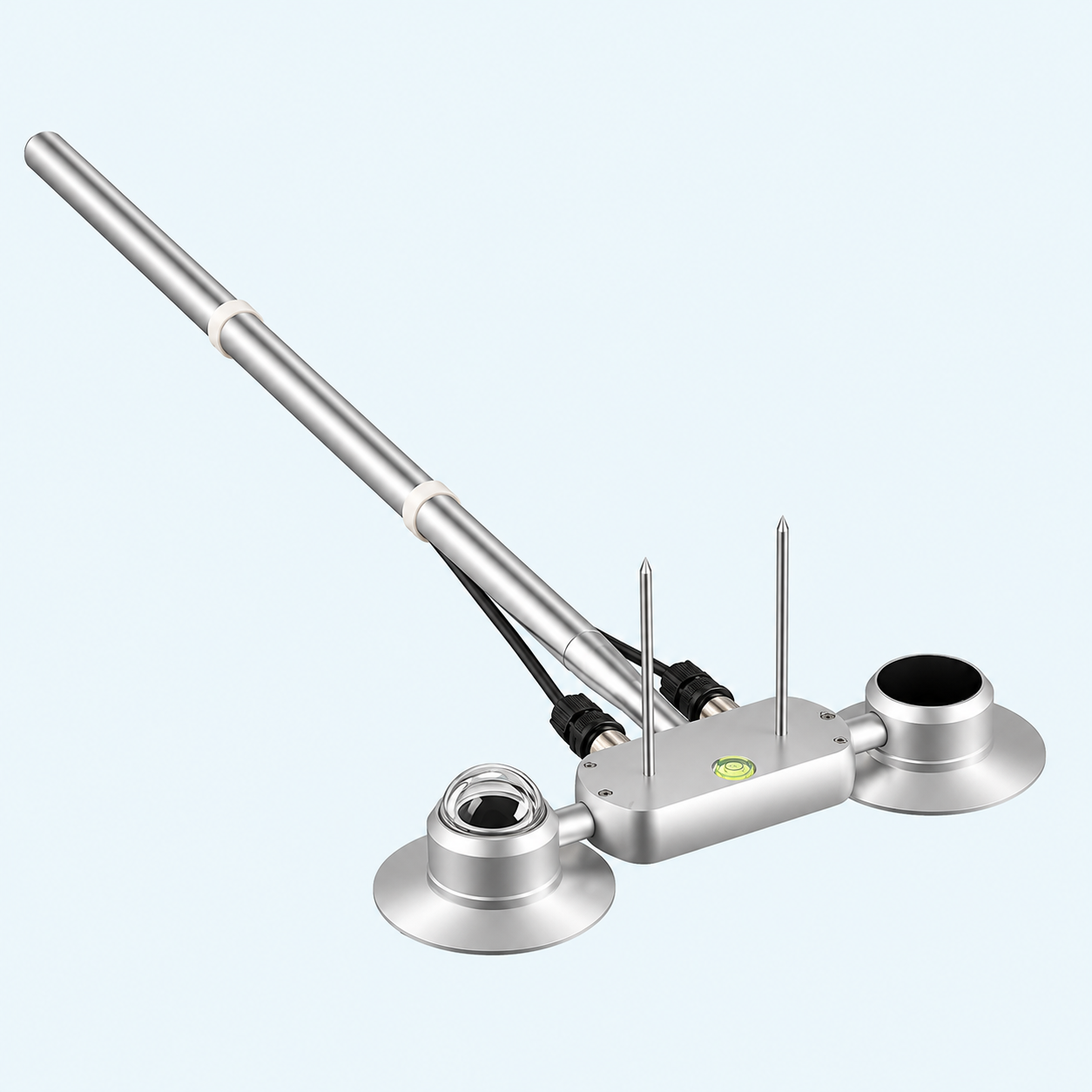
LPNET14 4-Component Net Irradiance Meter thumbnail 2
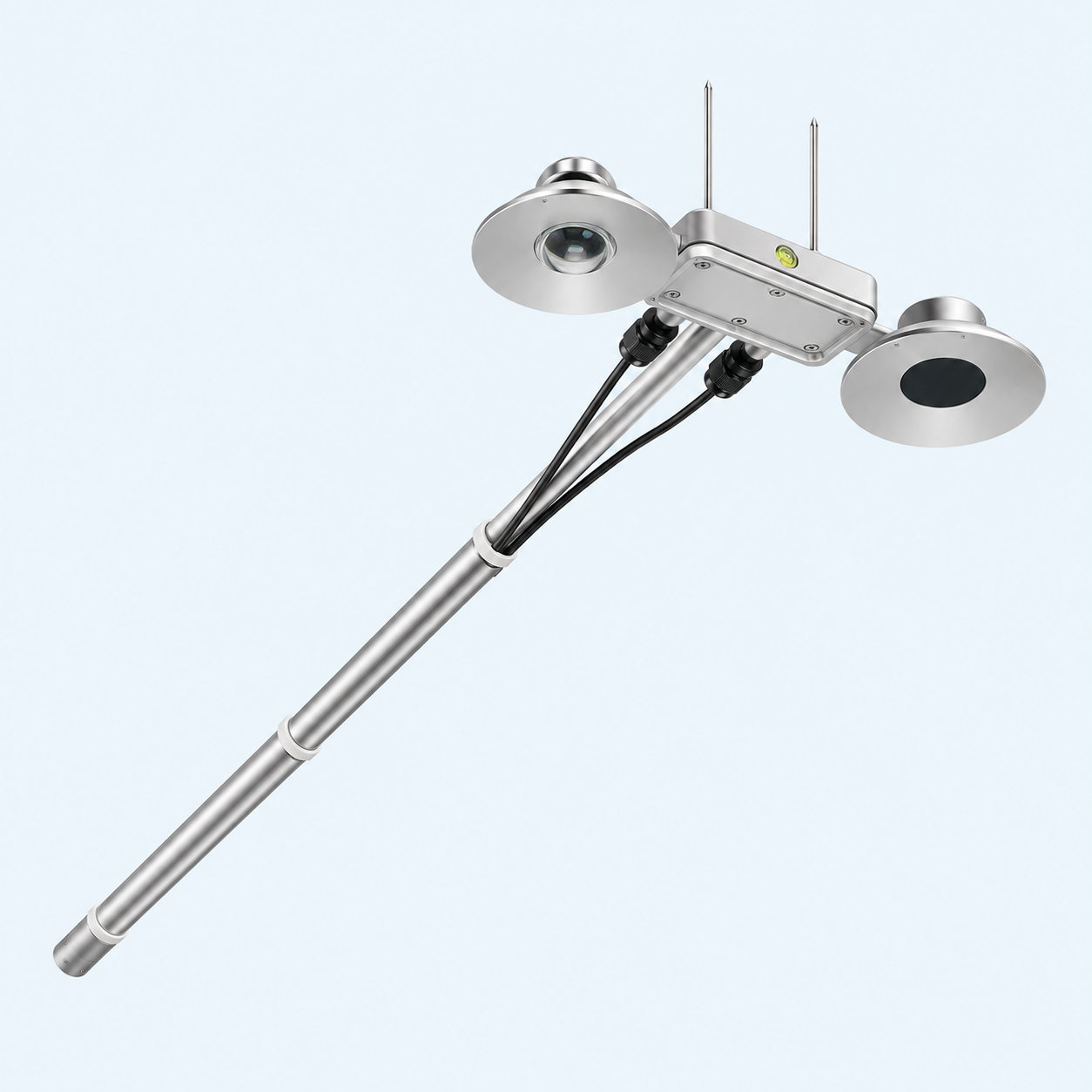
LPNET14 4-Component Net Irradiance Meter thumbnail 3

Senseca

LPNET14 4-Component Net Irradiance Meter


Four-component net irradiance meter for solar and infrared radiation monitoring.

  • Measures global and reflected solar irradiance, plus infrared radiation from the sky and ground

  • Overall spectral coverage of 0.3…45 µm with built-in NTC sensor for pyrgeometer temperature compensation

  • Passive operation without external power supply, IP65 protection and -40…+80 °C operating temperature

Quantity
1

Overview

The Senseca LPNET14 is a four-component net irradiance meter equipped with two pyranometers for measuring global and reflected solar irradiance and two pyrgeometers for measuring infrared radiation from the sky and ground. It covers an overall spectral range of 0.3…45 µm and incorporates an NTC temperature sensor for pyrgeometer temperature compensation.

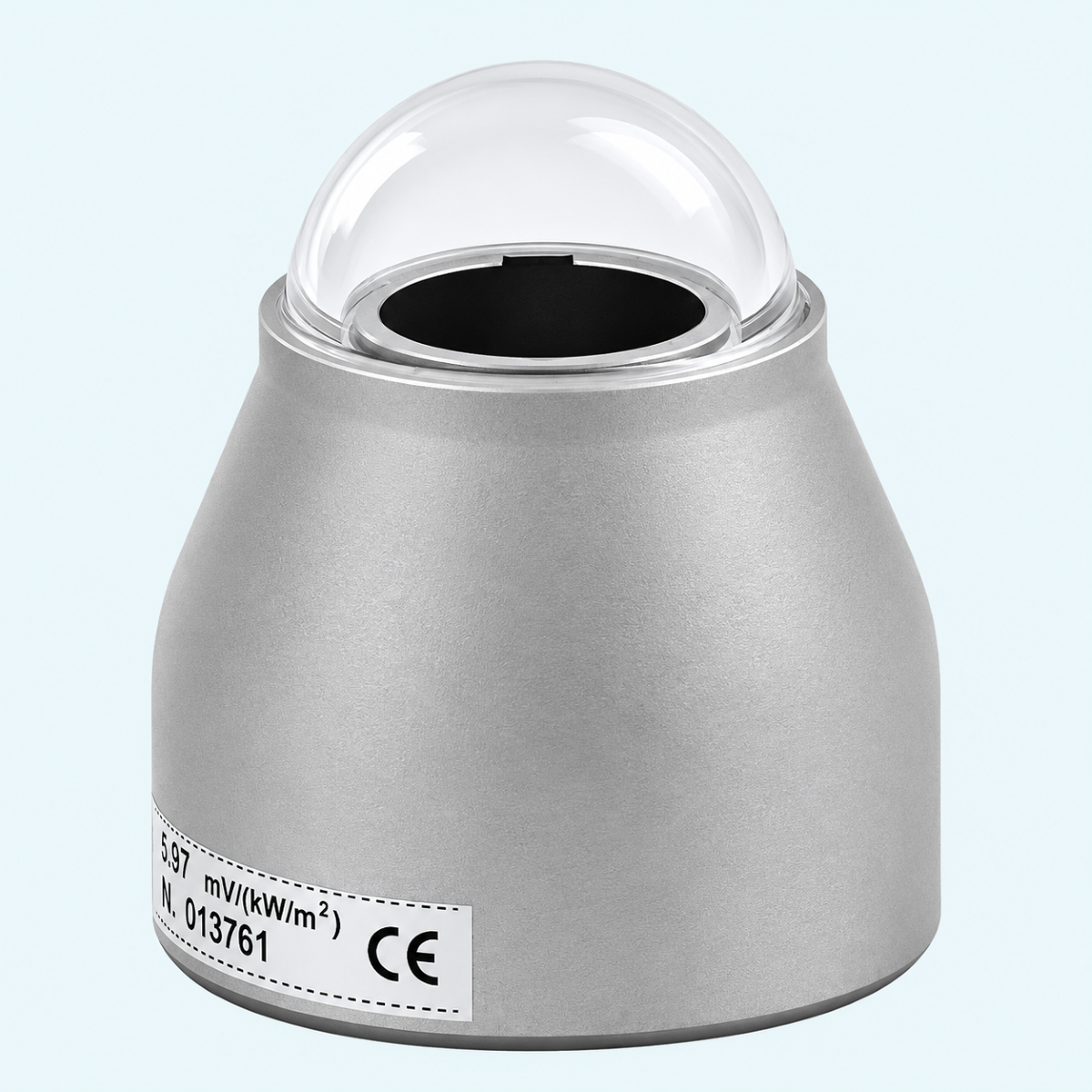
Designed for outdoor monitoring, the instrument features an anodized aluminium housing, optical glass pyranometer domes and silicon pyrgeometer windows with scratch-resistant DLC coating. It provides IP65 protection and operates from -40…+80 °C. The passive design requires no external power supply and features two 8-pole M12 connectors for connection to a voltmeter or data logger. Each instrument is factory calibrated and supplied with a calibration report.

Typical Applications

  • Four-component net radiation monitoring

  • Global and reflected solar irradiance measurement

  • Sky and ground infrared radiation measurement

  • Meteorological and environmental monitoring stations

  • Radiation data acquisition using voltmeters or data loggers

Key Features

  • Four-component measurement of global and reflected solar irradiance, plus sky and ground infrared radiation using two pyranometers and two pyrgeometers

  • Overall spectral coverage of 0.3…45 µm

  • Spectrally Flat Class C pyranometers according to ISO 9060:2018

  • Pyranometer measuring range of 0…2000 W/m²

  • Pyrgeometer measuring range of -300…+300 W/m²

  • Built-in NTC temperature sensor for pyrgeometer temperature compensation

  • Optical glass pyranometer domes and DLC-coated silicon pyrgeometer windows

  • Anodized aluminium housing with IP65 protection

  • Operating temperature range of -40…+80 °C

  • Passive operation without external power supply

  • Two 8-pole M12 connectors for sensor signal connections

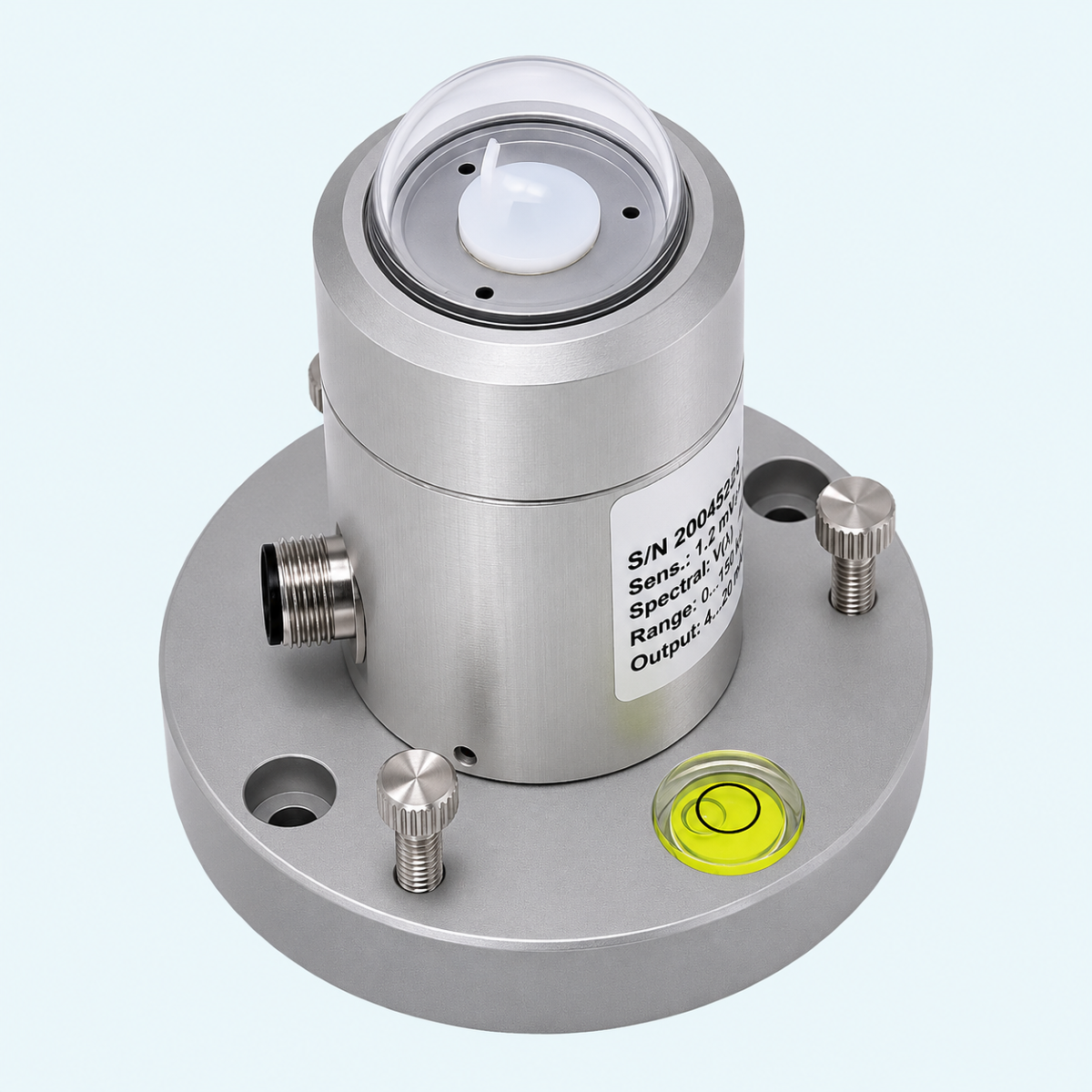
  • Integrated bubble level for horizontal installation alignment

  • Factory calibrated and supplied with calibration report

Benefits

  • Four-component solar and infrared radiation measurement supports comprehensive net radiation monitoring

  • Built-in NTC temperature sensing supports pyrgeometer temperature compensation

  • Factory calibrated and supplied with a calibration report for reference

  • Passive operation eliminates the need for an external power supply

  • IP65 protection and durable materials support outdoor monitoring in varying weather conditions

  • Integrated bubble level simplifies horizontal installation alignment

  • Two 8-pole M12 connectors allow connection to voltmeters or data loggers

  • Replaceable silica-gel cartridges help reduce internal condensation

Specifications

General

Model

LPNET14

Instrument type

4-component net irradiance meter

Sensor configuration

2 pyranometers and 2 pyrgeometers

Measured components

Global solar irradiance (ESW↓), reflected solar irradiance (ESW↑), sky infrared radiation (EFIR↓), ground infrared radiation (EFIR↑)

Overall spectral range

0.3…45 µm

Temperature sensor

NTC

Operating temperature

−40…+80 °C

Degree of protection

IP65


Pyranometer

Measuring principle

Thermopile

Classification

Spectrally Flat Class C according to ISO 9060:2018

Typical sensitivity

5…15 µV/(W/m²)

Impedance

33…45 Ω

Measuring range

0…2000 W/m²

Viewing angle

2π sr

Spectral range (50%)

300…2800 nm

Spectral range (95%)

335…2200 nm


Pyrgeometer

Measuring principle

Thermopile

Typical sensitivity

5…10 µV/(W/m²)

Impedance

33…45 Ω

Measuring range

−300…+300 W/m²

Viewing angle

160°

Spectral range (50%)

5.5…45 µm


Materials and Construction

Housing and fixing shaft

Anodized aluminium

Screen

ASA

Pyranometer dome

Optical glass

Pyrgeometer window

Silicon

Pyrgeometer window coating

Scratch-resistant DLC coating

Salts compartment cover

Polycarbonate

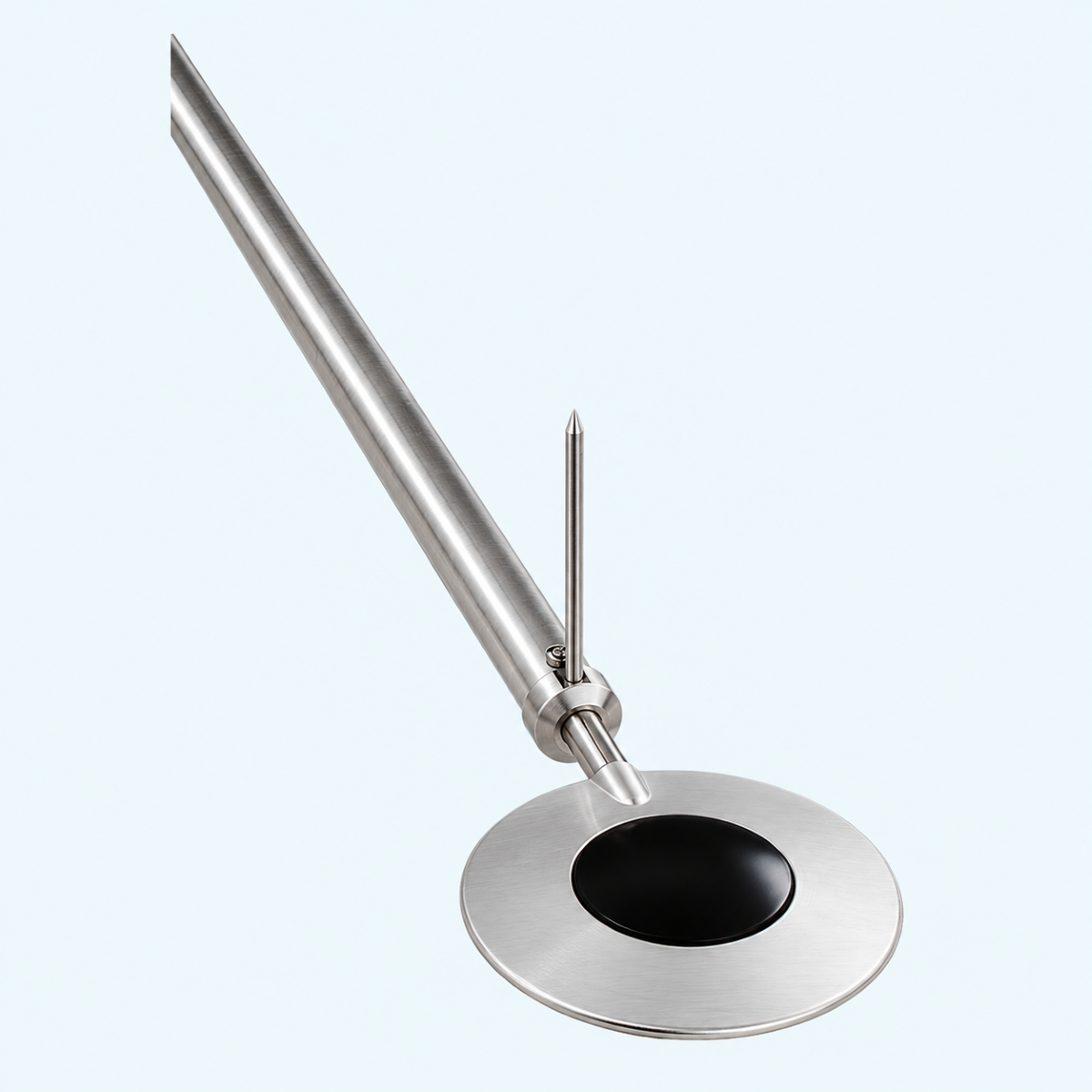
Bird spikes

Stainless steel


Electrical

Power supply

Not required (passive instrument)

Electrical connectors

2 × 8-pole M12 connectors

Connector functions

Separate connectors for pyranometers and pyrgeometers

Typical sensor output impedance

Less than 50 Ω

Typical output signal

A few mV

Recommended reading instrument resolution

1 µV

Reading instruments

Voltmeter or data logger


Installation

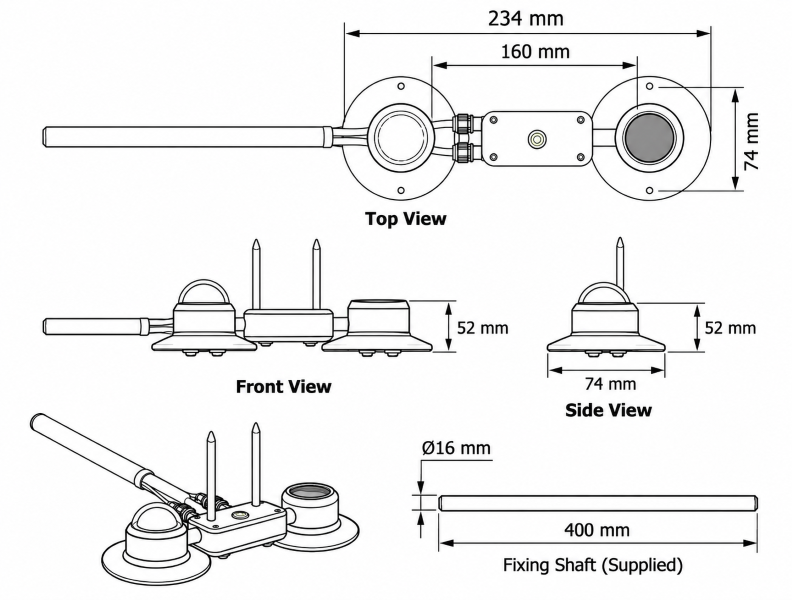
Fixing shaft dimensions

Ø16 mm × 400 mm

Horizontal alignment

Integrated bubble level

Obstruction requirements

No obstructions above the horizontal plane; where unavoidable, obstructions should not exceed 10°

Shadow prevention

Install where no shadows are cast on the sensors throughout the day

Northern Hemisphere mast installation

Position south of the mast according to ISO TR9901 and WMO recommendations


Calibration

Calibration condition

Factory calibrated

Pyranometer calibration standard

ISO 9847:2023 (Type A1)

Pyranometer calibration method

Comparison with a reference pyranometer

Pyranometer calibration reference

Reference sample calibrated annually at WRC (World Radiation Center)

Pyrgeometer calibration method

Outdoor comparison with a reference standard pyrgeometer

Pyrgeometer calibration reference

Reference standard pyrgeometer calibrated at WRC

Recommended calibration check

Annually


Maintenance

Internal moisture absorption

Silica-gel desiccant

Installed desiccant cartridges

2

Desiccant condition monitoring

Humidity indicator marker

Typical desiccant lifetime

4…12 months, depending on operating environment

Optical surface cleaning

Water and standard lens-cleaning paper; pure ethyl alcohol if necessary, followed by water

Desiccant replacement

ESD-safe environment


Supplied Accessories

Bird spikes

2

Desiccant recharges

5 sets, each containing 2 silica-gel cartridges and 1 marker

M12 female free connectors

2, supplied only if optional cables are not ordered

Calibration report

Included


Optional Cables and Spare Parts

Installation cable series

CPM12AA8N…

Cable connection

8-pole M12 connector at one end, open wires at the other

5 m cable code

CPM12AA8N.5

10 m cable code

CPM12AA8N.10

Installation cable requirement

2 identical cables, ordered separately

Desiccant spare-part code

LPG2

LPG2 contents

5 desiccant recharges

Drawing

LPNET14 4-Component Net Irradiance Meter Drawing

Downloads

LPNET14 Datasheet DownloadLPNET14 Datasheet
LPNET14 User Manual DownloadLPNET14 User Manual
LPNET14 CE Declaration of Conformity DownloadLPNET14 CE Declaration of Conformity