

Senseca
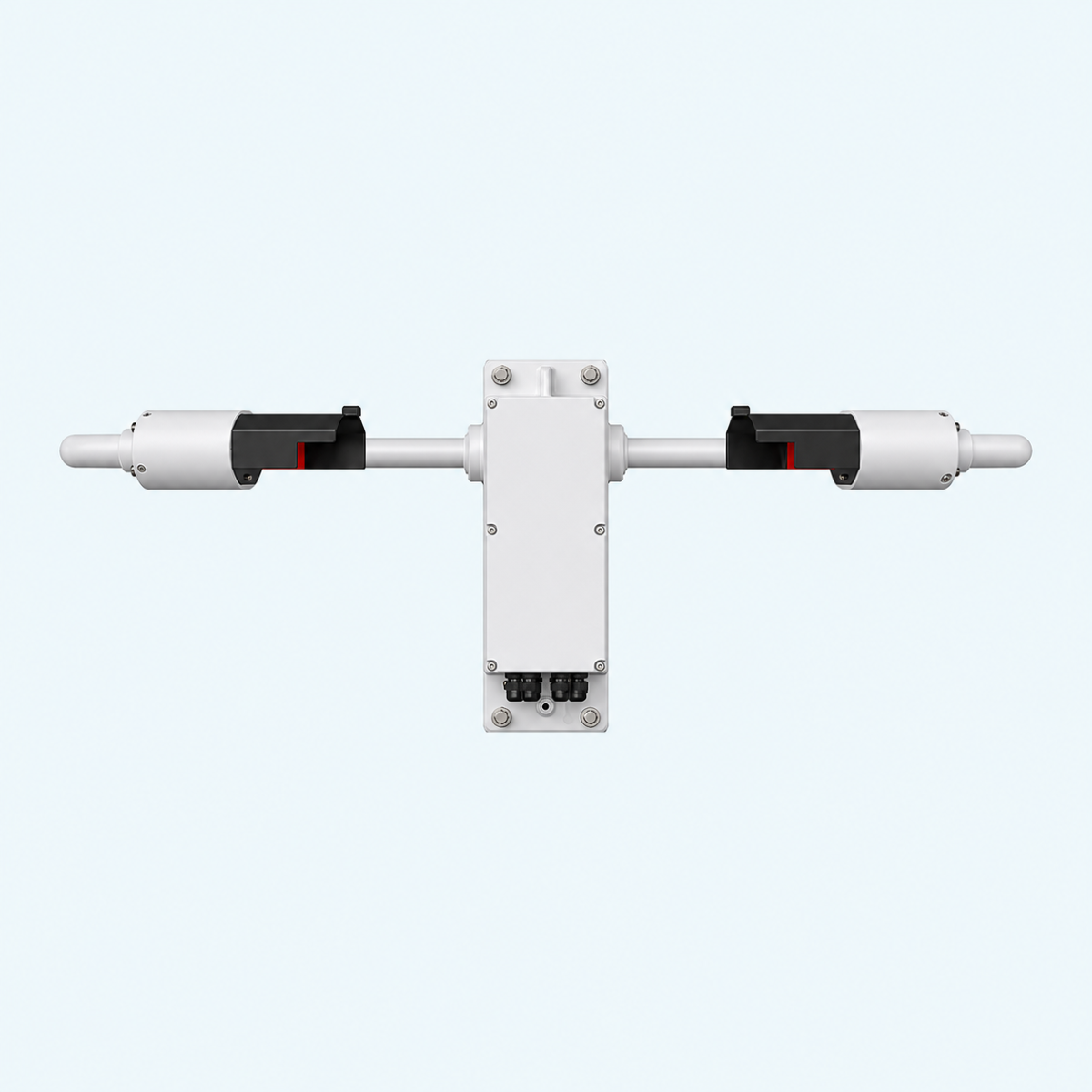
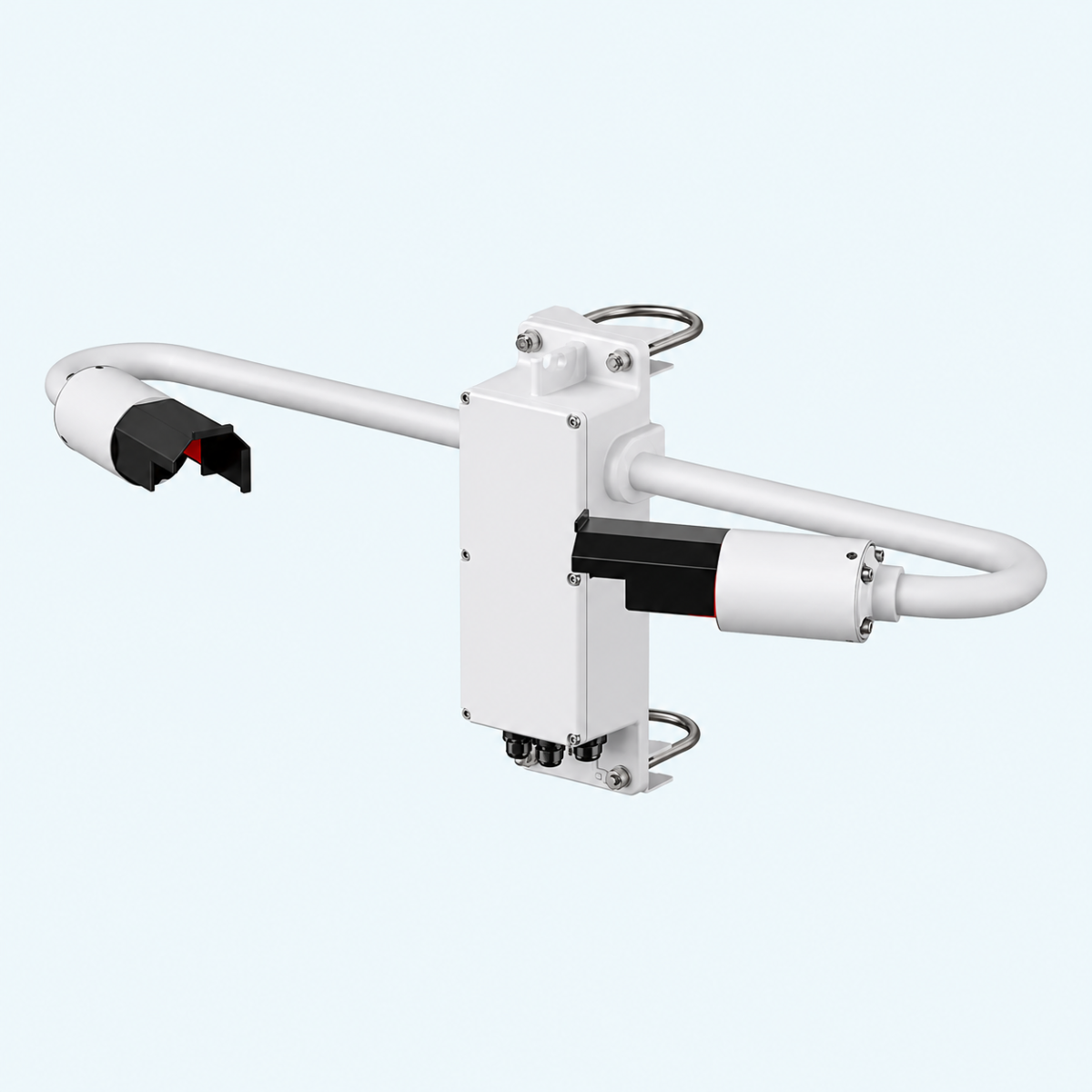
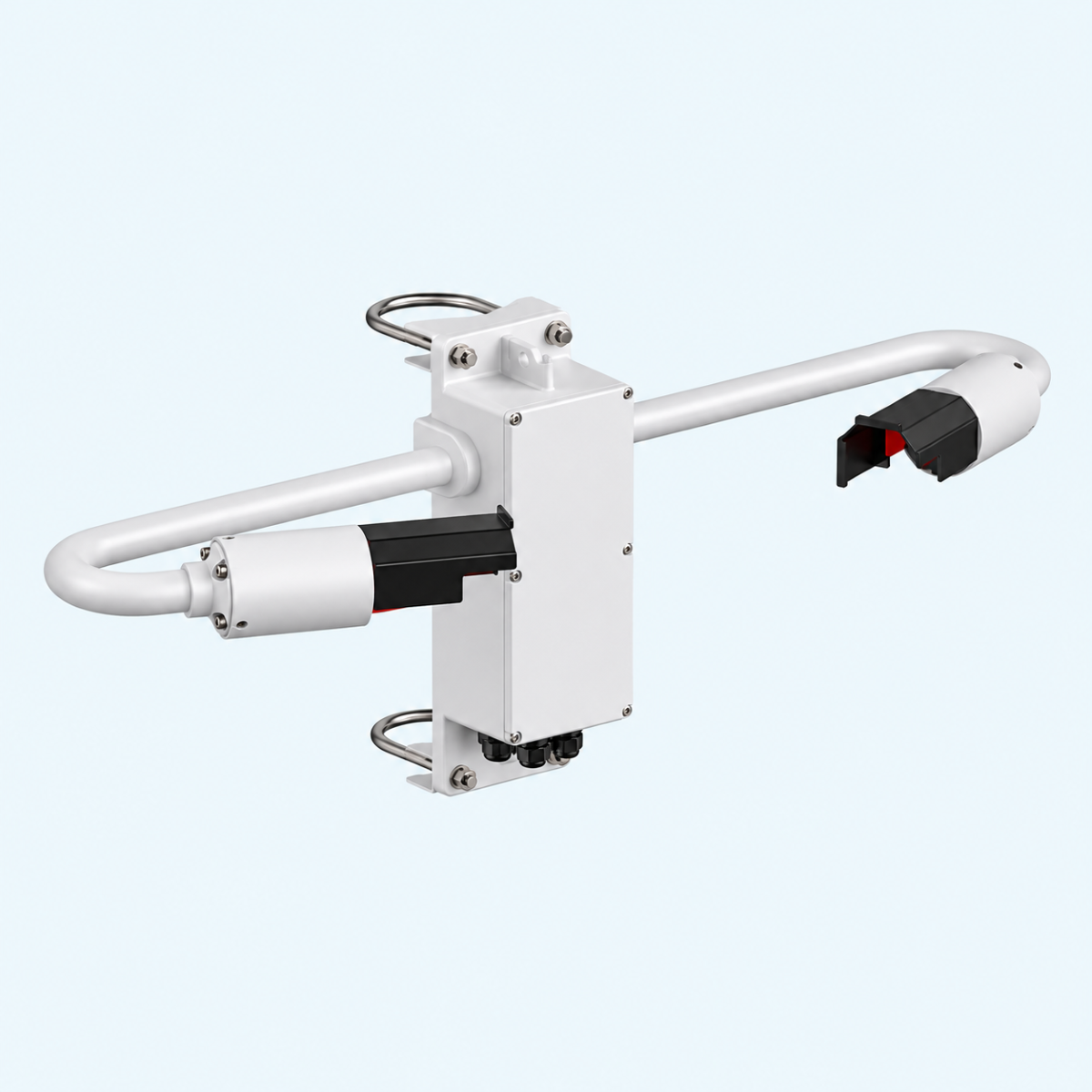
SWS-100 Visibility and Present Weather Sensor
Forward scatter visibility and present weather sensor for meteorological monitoring.
Visibility range 10 m…2 km (default), configurable up to 99.99 km
Reports 7 WMO Table 4680 present weather codes
RS232, RS422 or RS485 serial outputs with selectable 10…300 s intervals
Optional analogue and relay outputs (AR) or ALS-2 interface (WA) for RVR applications
Standard window heaters, transmitter window contamination monitoring and optional hood heating
IP66/IP67 aluminium housing, operating temperature −40…+60 °C
Overview
The Senseca SWS-100 is a compact forward scatter visibility and present weather sensor designed to measure Meteorological Optical Range (MOR) and identify fundamental weather conditions using 7 WMO Table 4680 codes, including drizzle, rain, snow, fog, haze and unidentified precipitation. It operates over a default visibility range of 10 m to 2 km, configurable up to 99.99 km, with measurement performance stated by the manufacturer as comparable to a transmissometer. Calibration is performed in accordance with ICAO 9328 and is traceable to a national weather service transmissometer.
The sensor provides instantaneous and averaged visibility measurements through ASCII serial communication via RS232, RS422 or RS485, with selectable output intervals of 10 to 300 seconds. Optional configurations include analogue and relay outputs (AR) or an ALS-2 Ambient Light Sensor interface (WA) for Runway Visual Range (RVR) applications. Designed for outdoor operation, it features standard window heaters, transmitter window contamination monitoring with automatic correction and two-stage cleaning warnings, and optional hood heating. The IP66/IP67 aluminium housing operates from −40 °C to +60 °C, supporting reliable monitoring in demanding environmental conditions.
Typical Applications
National meteorological visibility and present weather monitoring networks
Airport visibility monitoring and Runway Visual Range (RVR) systems with ALS-2
Road weather monitoring and highway fog warning systems
Wind farm obstacle light control based on visibility conditions
Key Features
Infrared forward scatter measurement principle with 39°…51° scattering angle, centred at 45°
Visibility measurement range 10 m…2 km (default), configurable up to 99.99 km
Selectable visibility measurement resolution of 1 m or 10 m (default)
Instantaneous and averaged Meteorological Optical Range (MOR) outputs
Identification of 7 WMO Table 4680 present weather codes
ICAO 9328 calibration traceable to a national weather service transmissometer
RS232, RS422 or RS485 serial communication with ASCII data output
Selectable output intervals of 10…300 seconds
Optional analogue and relay interface (AR) with 0…10 Vdc, selectable 0…20 mA or 4…20 mA outputs, and three relays
Optional ALS-2 Ambient Light Sensor interface (WA) for Runway Visual Range (RVR) applications
Standard window heaters and optional hood heaters for cold weather operation
Transmitter window contamination monitoring with automatic correction and two-stage cleaning warnings
Comprehensive self-test and diagnostic reporting
IP66/IP67 aluminium housing with operating temperature range of −40…+60 °C
Sensor power supply of 9…36 Vdc
Benefits
Visibility measurement and present weather identification from one sensor
Configurable visibility range to suit different monitoring requirements
Transmissometer-comparable performance in a compact, cost-effective design
ICAO-aligned calibration supports aviation visibility monitoring
Multiple serial interfaces simplify integration with monitoring systems
Optional analogue and relay outputs enable local monitoring and control
Supports Runway Visual Range (RVR) applications when combined with ALS-2
Standard window heating and optional hood heating support cold weather operation
Automatic contamination correction and cleaning warnings help reduce maintenance requirements
Self-test and diagnostic reporting simplify sensor condition monitoring
Weather-resistant aluminium housing supports unattended outdoor operation
Specifications
Visibility Measurement | |
|---|---|
Measured parameter | Meteorological Optical Range (MOR) |
Measurement principle | Infrared forward scatter |
Scattering angle | 39°–51°, centred at 45° |
Default visibility range | 10 m–2 km |
User-configurable visibility range | 10 m–99.99 km (SWS-100 datasheet) |
Measurement resolution | 10 m (default); optional 1 m |
Measurement outputs | Instantaneous and averaged MOR |
Extinction coefficient (EXCO) | Optional output |
Measurement time constant | 10–300 seconds (default 60 seconds) |
MOR zero stability – temperature effects | ≤0.02 km⁻¹ |
MOR zero stability – long-term drift | ≤0.02 km⁻¹ |
Visibility Measurement Error | Measurement Error |
|---|---|
600 m | ≤4.2% |
2 km | ≤5.1% |
5 km | ≤6.8% |
10 km | ≤9.6% |
15 km | ≤12.3% |
20 km | ≤14.8% |
25 km | ≤17.1% |
30 km | ≤19.4% |
Present Weather Identification | |
|---|---|
Weather classification | WMO Table 4680 |
Number of present weather codes | 7 |
Rain detection threshold | 0.015 mm/h (0.0006 in/h) |
Snow detection threshold (water equivalent) | 0.0015 mm/h (0.00006 in/h) |
Supported WMO Present Weather Codes | |
|---|---|
00 | No significant weather observed |
04 | Haze or smoke |
30 | Fog |
40 | Indeterminate precipitation type |
50 | Drizzle |
60 | Rain |
70 | Snow |
Sensor Characteristics (Optical Sampling) | |
|---|---|
Sample volume | 400 cm³ |
Sensor Characteristics (Infrared Light Source) | |
|---|---|
Type | Infrared-emitting diode (IRED) |
Central wavelength | 0.85 µm |
Bandwidth | 0.04 µm |
Modulation frequency | 2,000 Hz |
Light source lifetime | >10 years |
Sensor Characteristics (Photodiode Detector) | |
|---|---|
Detector type | Silicon photovoltaic |
Filter bandwidth | 0.08 µm at 0.85 µm |
Sensor Characteristics (Internal Temperature Sensor) | |
|---|---|
Type | Circuit-mounted IC |
Temperature range | −40 to +60 °C |
Digital Communication Interface | |
|---|---|
Primary serial interface | RS232C (full duplex), RS422 or RS485 |
Secondary serial interface | RS232C (full duplex) |
Data output format | ASCII |
Selectable baud rates | 1,200–57,600 baud |
Data bits | 8 |
Parity | None |
Stop bits | 1 |
Flow control | None |
Message termination | CR, LF |
Selectable output interval | 10–300 seconds |
Analogue Outputs (Optional AR Interface) | |
|---|---|
Voltage output | 0–10 Vdc |
Voltage output scaling | 0 to MORMAX |
Voltage output maximum load | 10 kΩ (manufacturer's designation) |
Current output | Selectable 0–20 mA or 4–20 mA |
Current output scaling | 0 to MORMAX |
Current output maximum resistance | 500 Ω |
Relay Outputs (Optional AR Interface) | |
|---|---|
Number of relays | 3 |
Contact configuration | Common, normally closed (NC) and normally open (NO) |
Fault relay | Normally energised; releases on fault |
Relay 1 | Normally de-energised; configurable visibility threshold |
Relay 2 | Normally de-energised; configurable visibility threshold, precipitation, snow or window contamination |
Visibility threshold range | 0.10–20 km or MORMAX |
Default visibility threshold | 1 km |
Maximum switching voltage | 220 Vdc / 250 Vac |
Maximum switching current | 2 A (resistive load) |
Maximum switching power | 60 W / 125 VA |
Contact material | Silver alloy with gold alloy overlay |
Power Requirements | |
|---|---|
Sensor supply voltage | 9–36 Vdc |
Typical sensor supply voltage | 24 Vdc |
Hood heater supply voltage | 24 Vac or 24 Vdc |
Hood heater power (SWS-100) | 24 W |
Window heater power (SWS-100) | 1.7 W, supplied from sensor power |
ALS-2 option – additional sensor power | Up to 2 W |
ALS-2 option – additional heater power | Up to 47 W |
Heating, Contamination Monitoring and Diagnostics | |
|---|---|
Window heaters | Fitted as standard |
Hood heaters | Optional |
Hood heater activation temperature | 2 °C |
Hood heater deactivation temperature | 4 °C |
Transmitter window contamination monitoring | Standard |
Receiver window contamination monitoring | Optional |
Contamination correction | Automatic |
Cleaning warnings | Two-stage |
Self-test and monitoring | Standard or advanced configuration |
Functional test mode | Available |
Environmental | |
|---|---|
Operating temperature | −40 to +60 °C |
Operating humidity | 0–100% RH |
Altitude | 0–15,000 ft |
Precipitation conditions | All weather |
Protection rating | IP66/IP67 |
Physical Properties | |
|---|---|
Housing material | Aluminium |
Standard surface finish | Powder paint |
Optional surface treatment | Hard anodised base layer |
Sensor weight | 3.8 kg |
Weight including pole mounting kit | 4.3 kg |
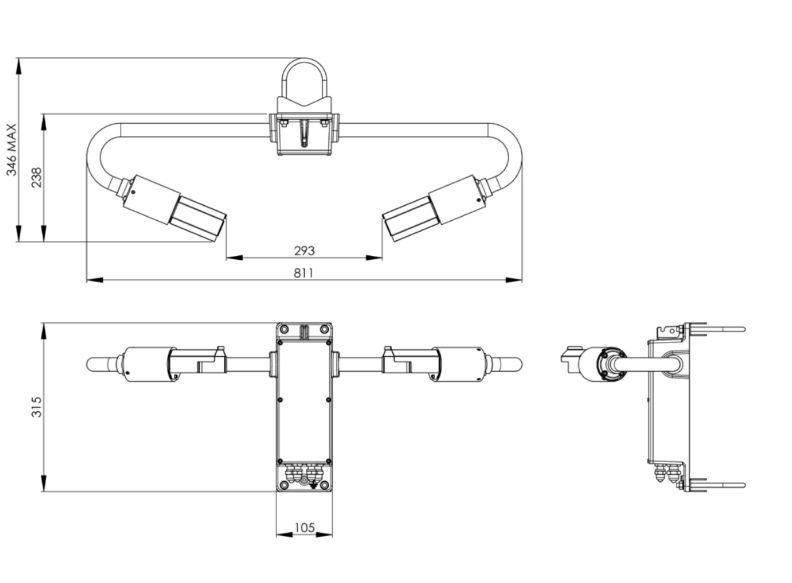
Overall dimension stated in datasheet | 811 mm |
Maintenance and Service Life | |
|---|---|
Typical calibration check interval | 6 months |
Typical window cleaning interval | 3 months |
Manufacturer-stated lifetime | >10 years |
Warranty | 3 years |
Certification and Compliance | |
|---|---|
Calibration procedure | In accordance with ICAO 9328 |
Calibration traceability | National weather service reference transmissometer |
Aviation-related requirements | ICAO and WMO |
CE certification | CE certified |
EMC compliance | EN 61326 (datasheet); EN 61326-1:2021 (manual) |
RoHS compliance | Compliant |
WEEE compliance | Compliant |
Available Configurations | |
|---|---|
Housing | Standard powder-coated aluminium or hard-coat anodised, powder-coated aluminium |
Hood heating | HV – with heating; NH – without heating |
Self-test and monitoring | S – standard; A – advanced |
Cable glands | PG – standard plastic cable glands; MG – single metal cable gland |
Interface board | NA – without option board; WA – ALS-2 interface; AR – analogue and relay interface |
Configuration | RC – regular; SC – special |
Drawing
Downloads
| SWS-100 Family Datasheet | DownloadSWS-100 Family Datasheet |
|---|---|
| SWS-Series Family User Manual | DownloadSWS-Series Family User Manual |
Related Products
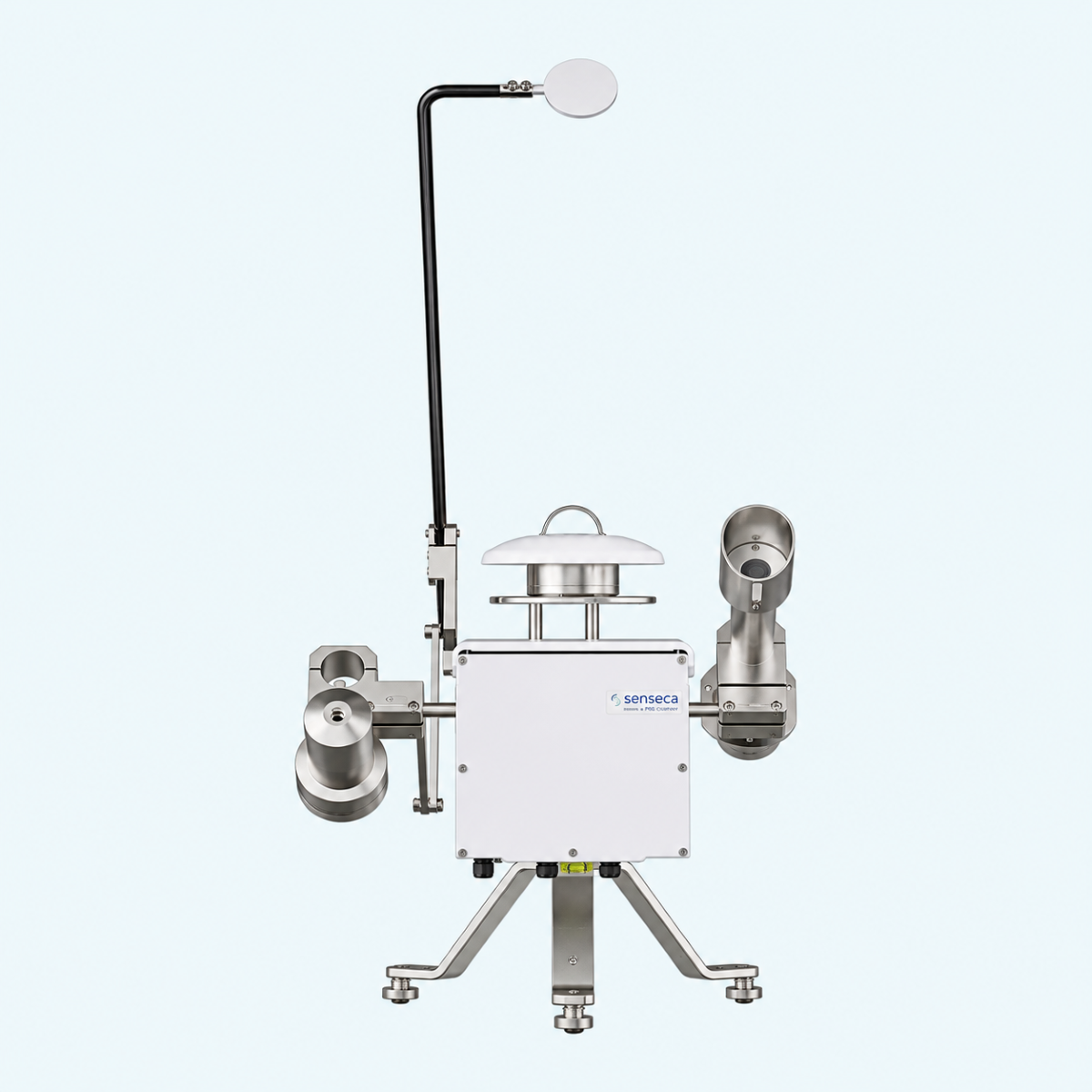
Senseca
SEMS-2000 Solar Energy Measurement System
Compact 2-axis solar tracking system for automatic DNI, DHI and GHI monitoring with suitable sensors.
Learn More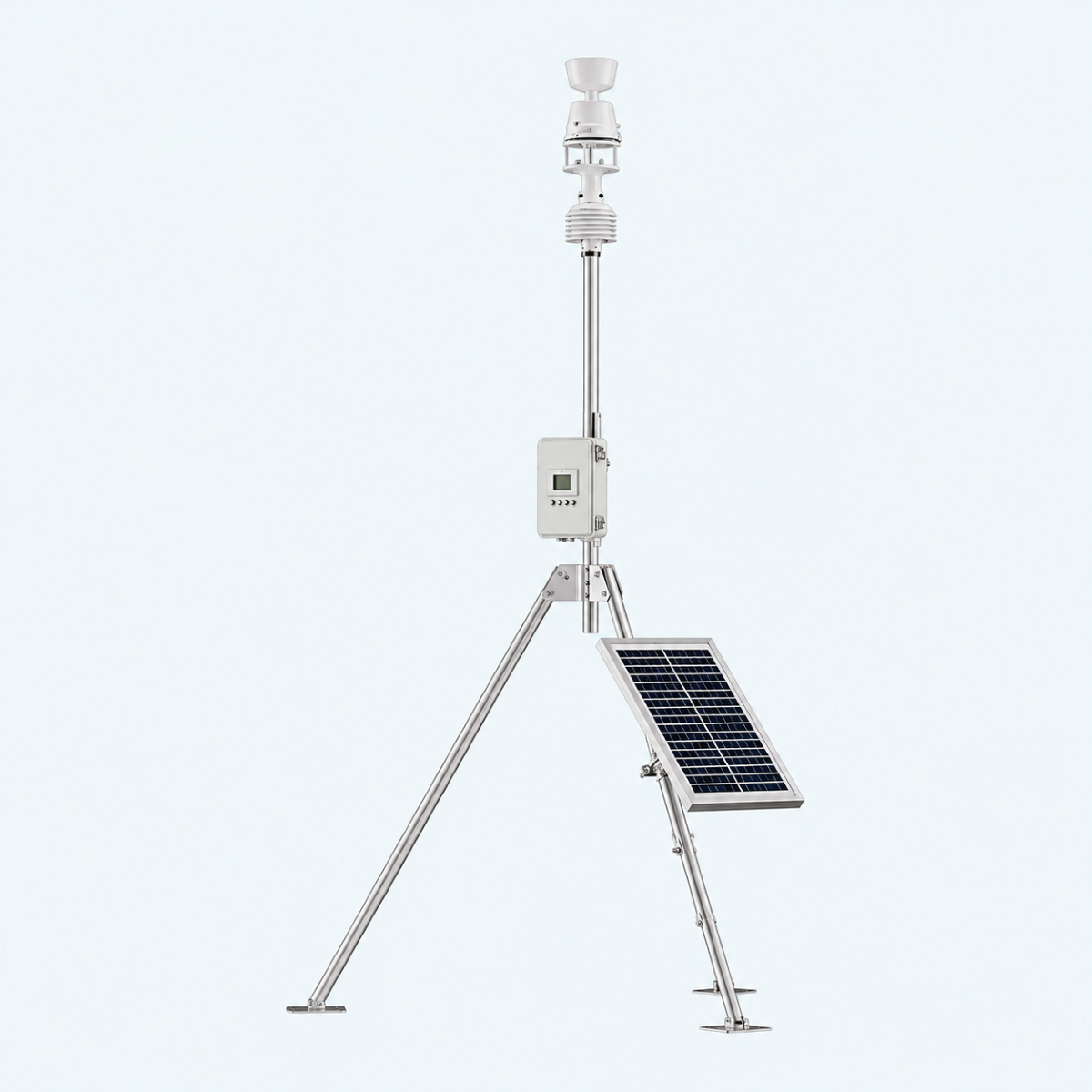
Senseca
HDMCS-100 Compact Weather Station
Compact, self-powered automatic weather station for wind, temperature, humidity, pressure and rainfall monitoring.
Learn More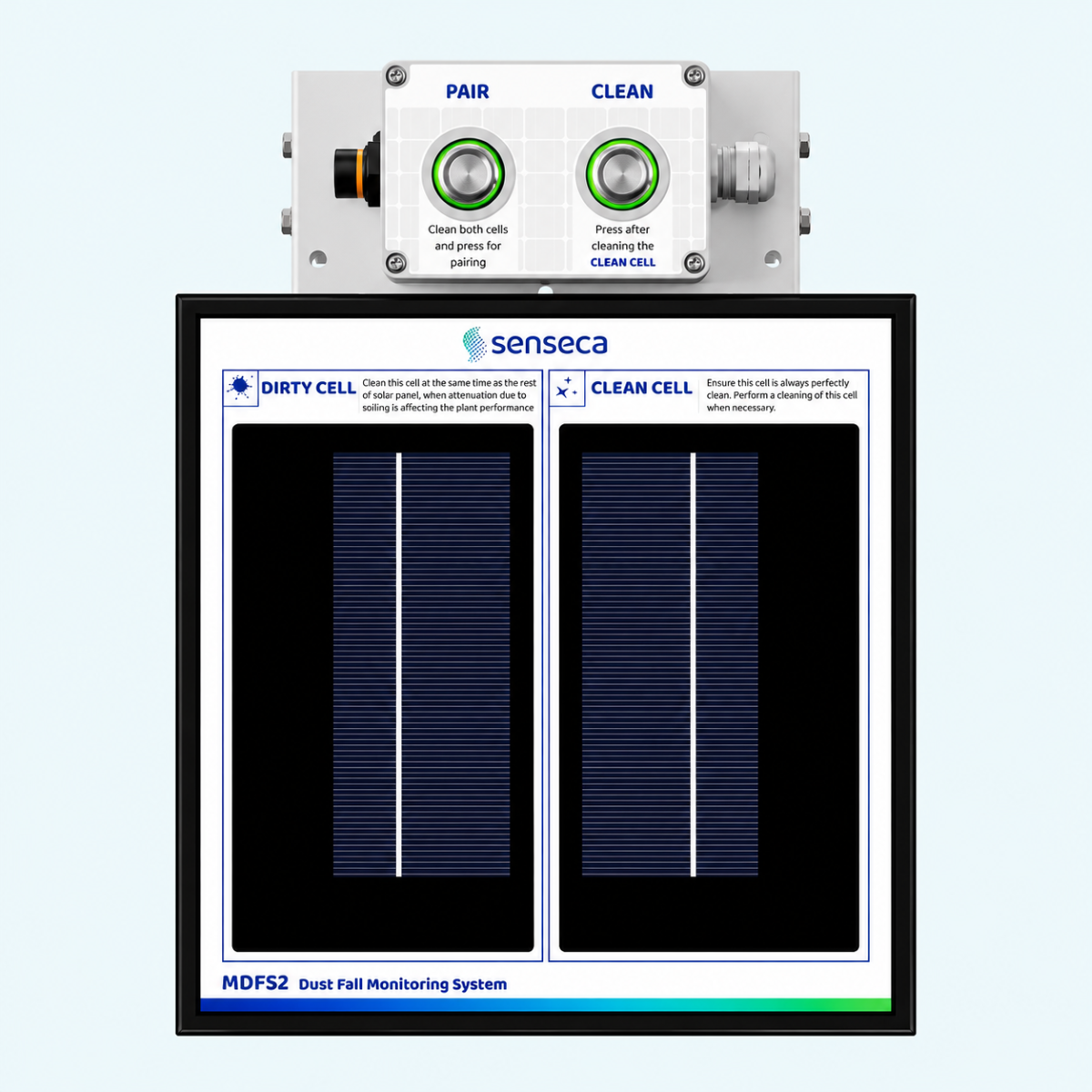
Senseca
GEO-MDFS2 Dust Fall Monitoring System
Dust fall monitoring system for PV panel cleaning decisions.
Learn More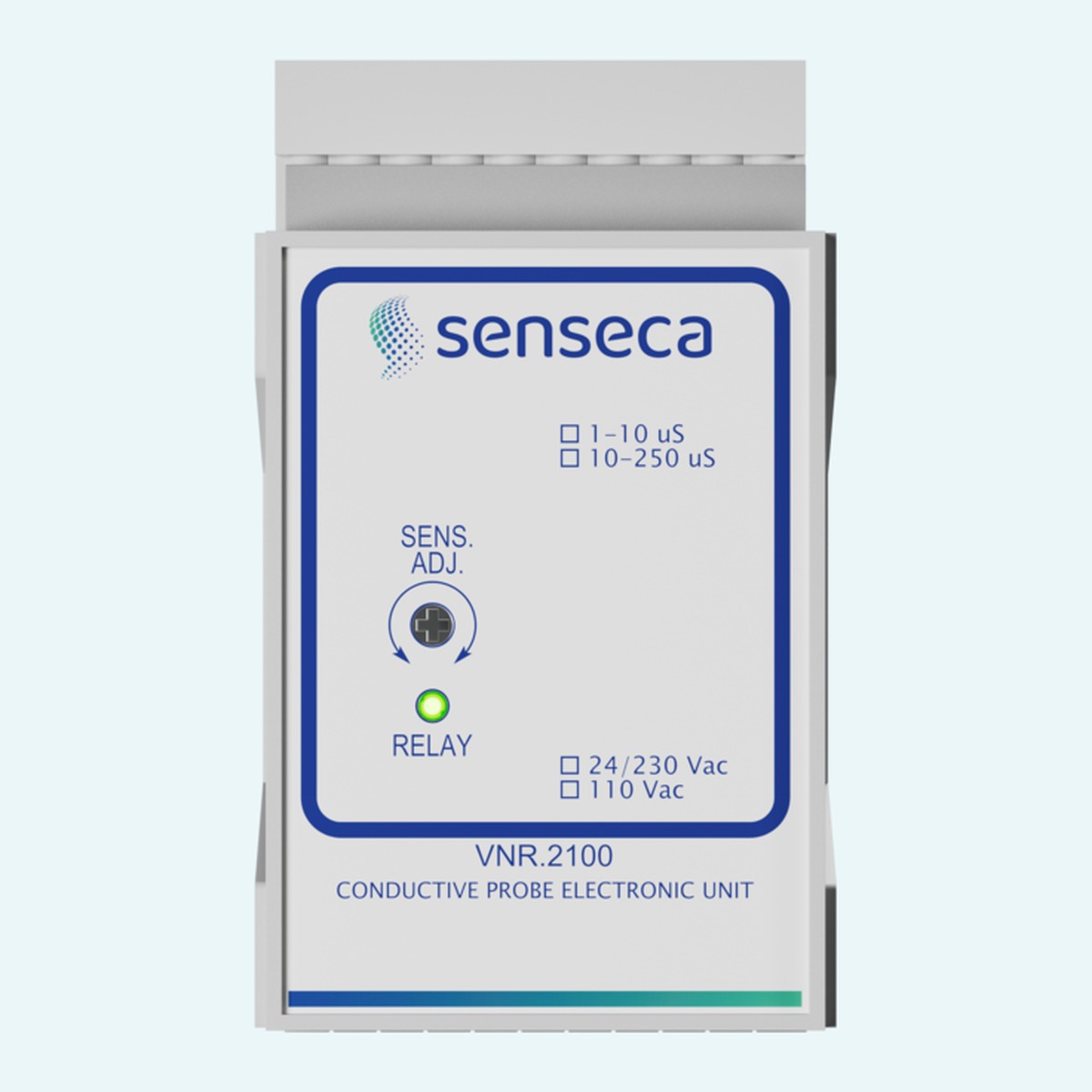
Senseca
VNR 21/22 Conductive Level Signal Amplifier
Signal amplifier for SL series conductive level probes.
Learn More