

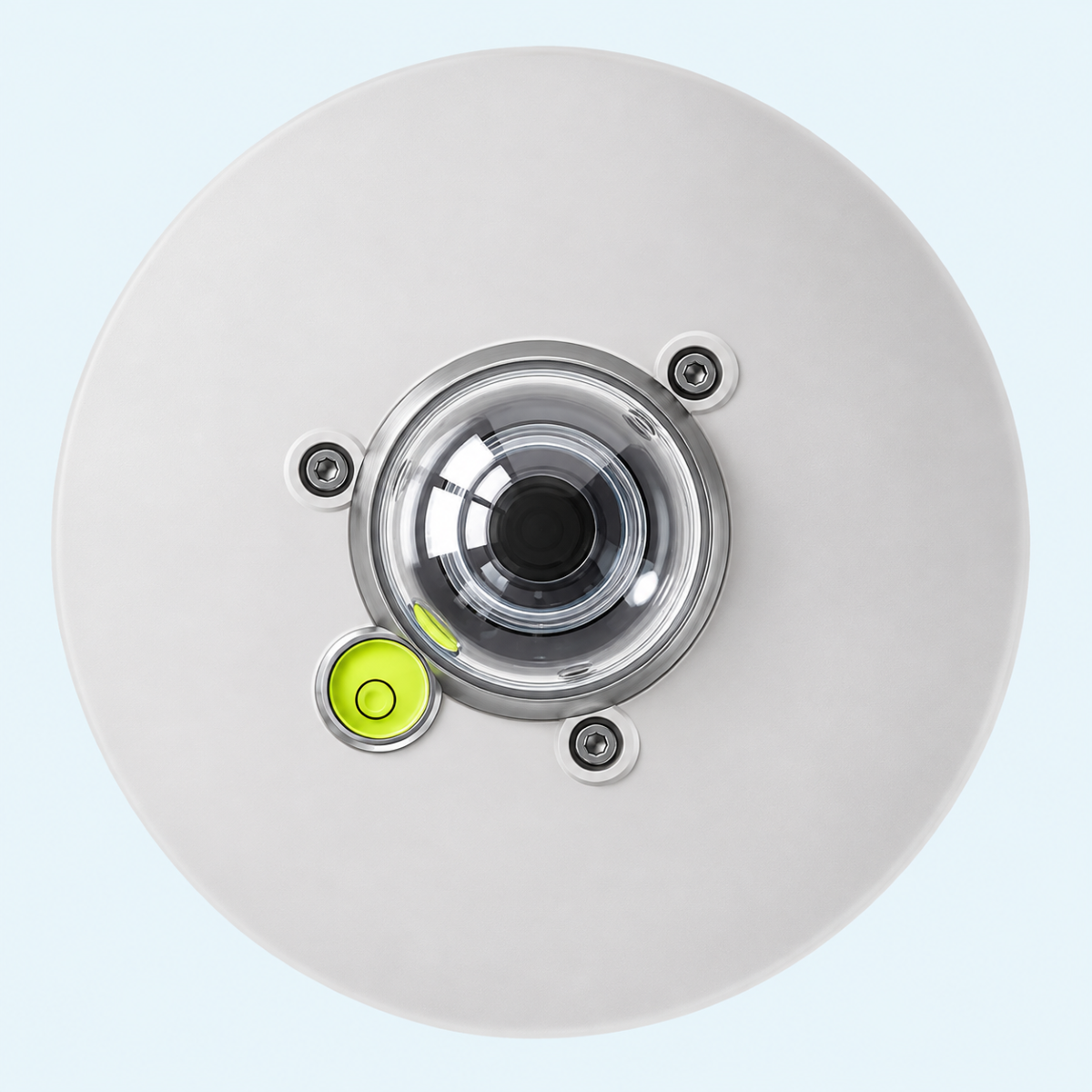
Senseca
LPS02 Class B Pyranometer for Accurate Global Solar Irradiance Measurement and Monitoring
Spectrally Flat Class B pyranometer for global solar irradiance monitoring.
Thermopile sensor with −200…4000 W/m² measuring range
283…2800 nm spectral range and 0.1 W/m² resolution
RS485 Modbus-RTU, configurable analog, 2-wire 4…20 mA or passive mV outputs, depending on model
IP67 protection with integrated bubble level and adjustable feet
Overview
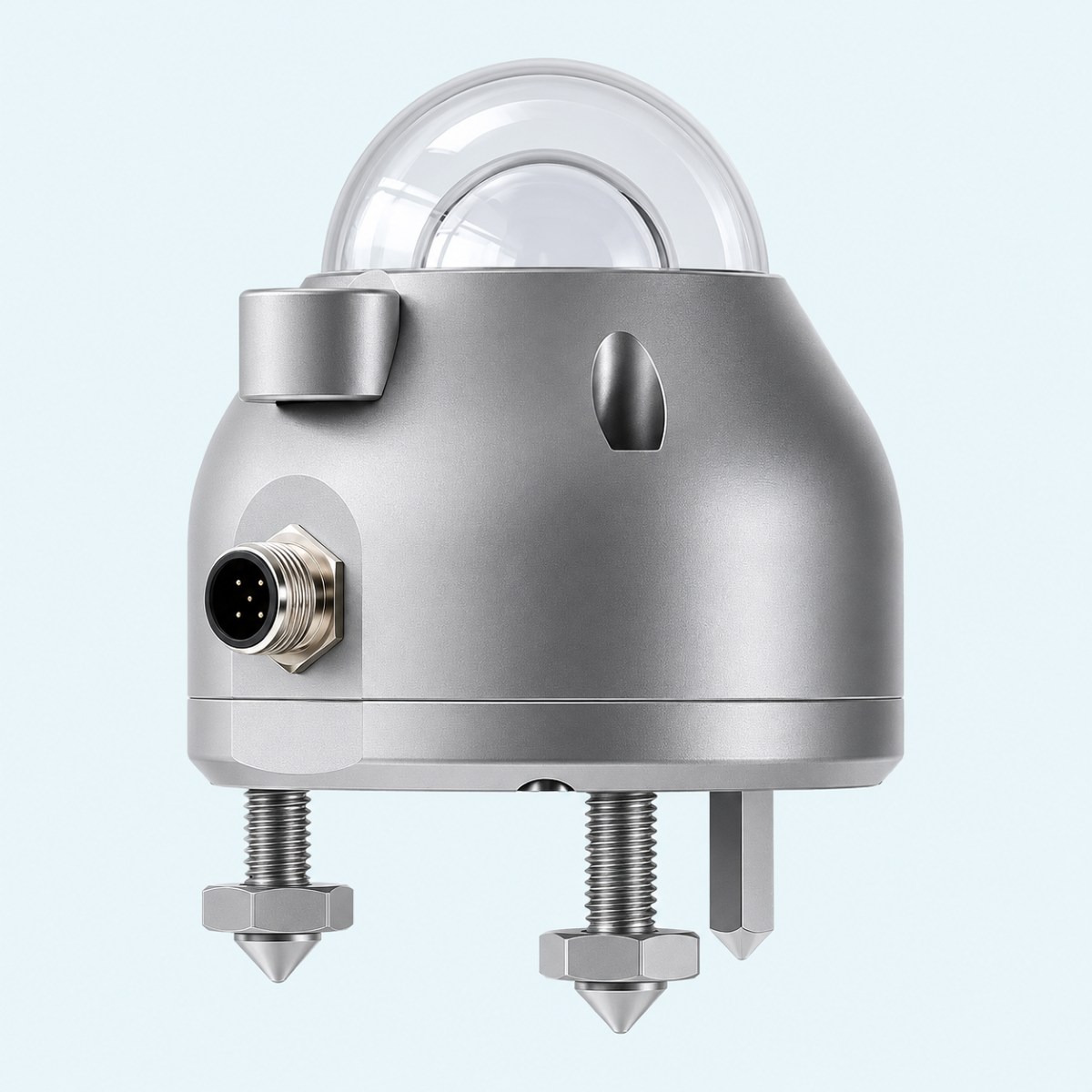
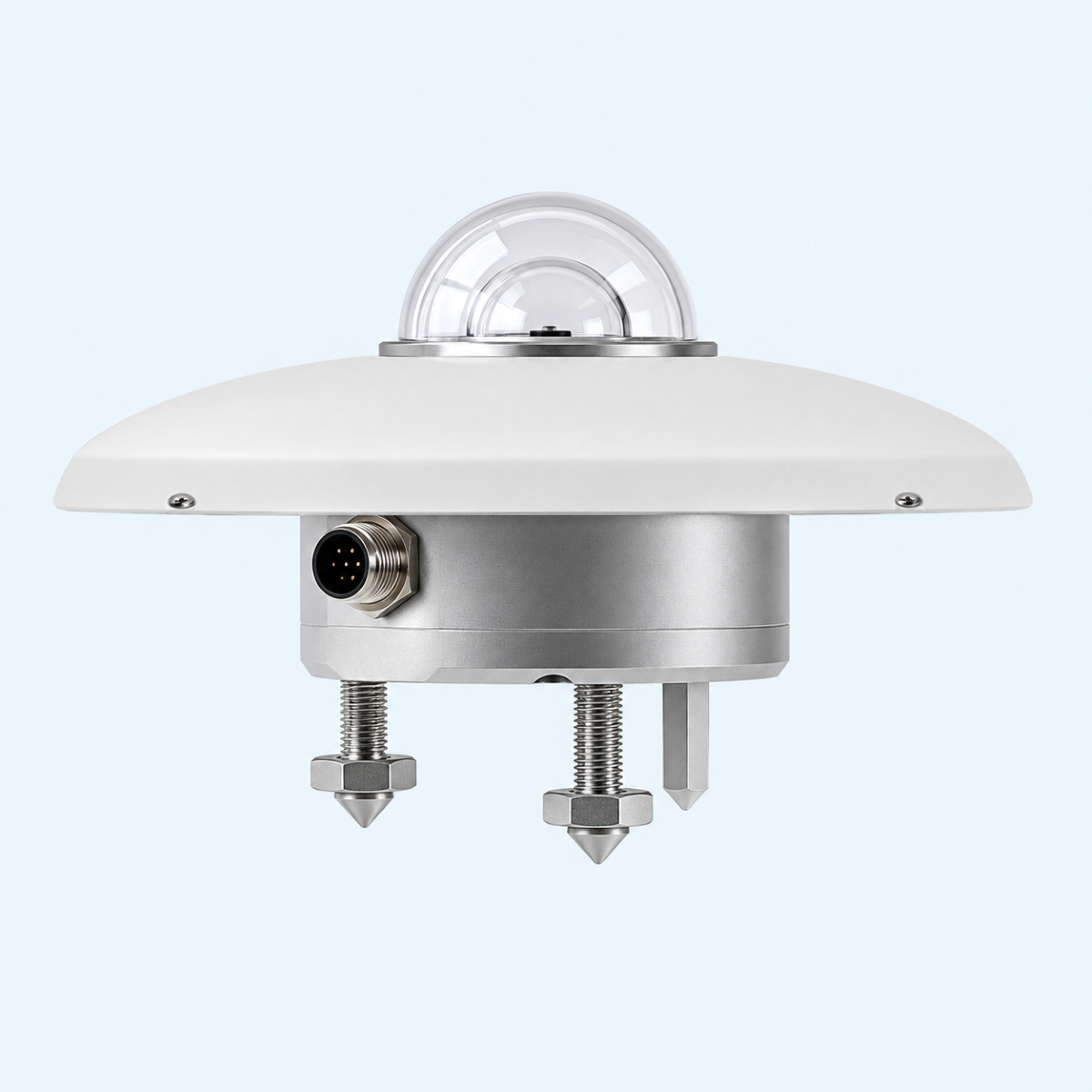
The Senseca PYRAsense LPS02 series is a Spectrally Flat Class B pyranometer designed to measure global solar irradiance on a flat surface, including direct and diffuse solar radiation. Classified according to ISO 9060:2018, it uses a thermopile sensor with a measuring range of −200…4000 W/m², a spectral range of 283…2800 nm and a resolution of 0.1 W/m². It is suitable for environmental studies, meteorology, research and photovoltaic (PV) monitoring.
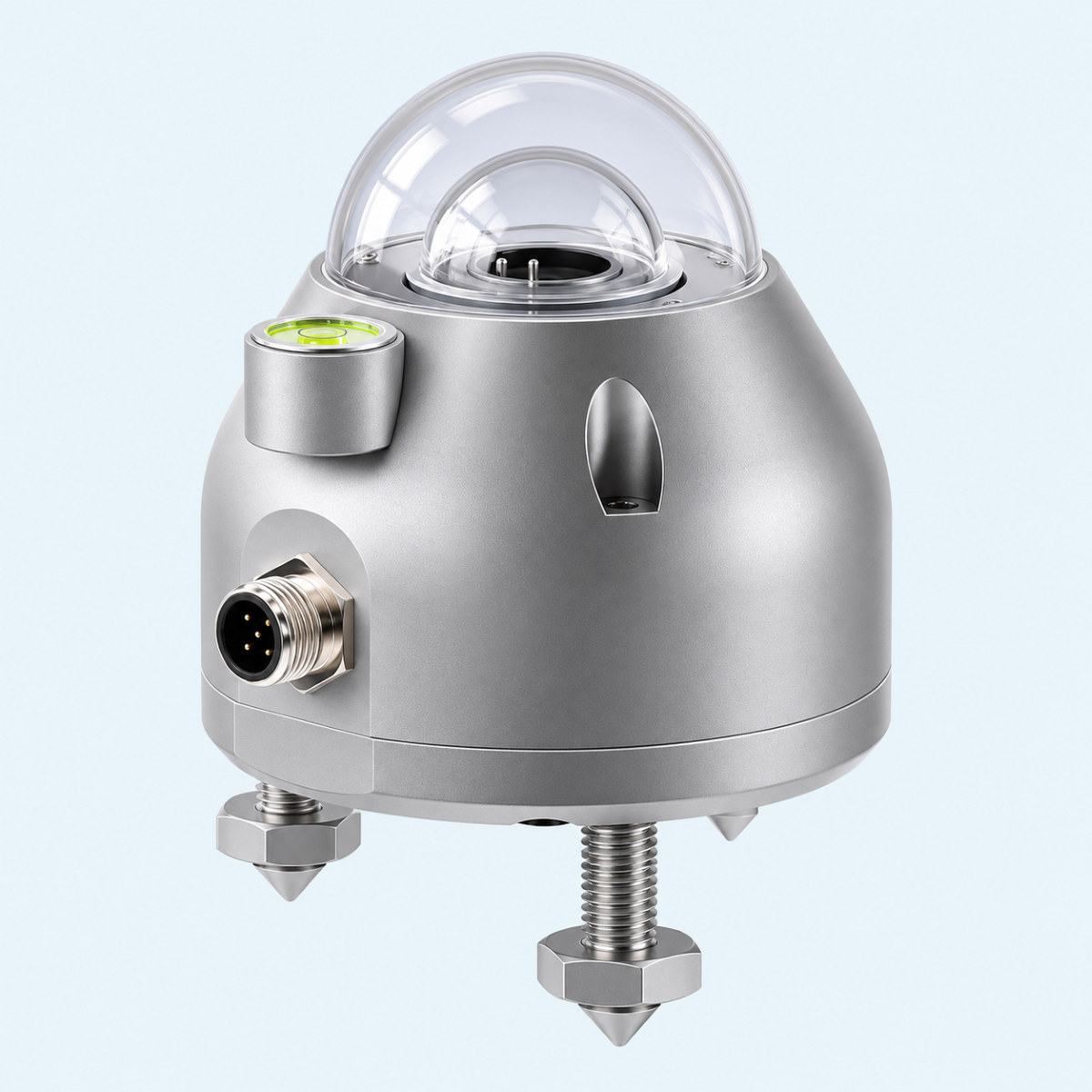
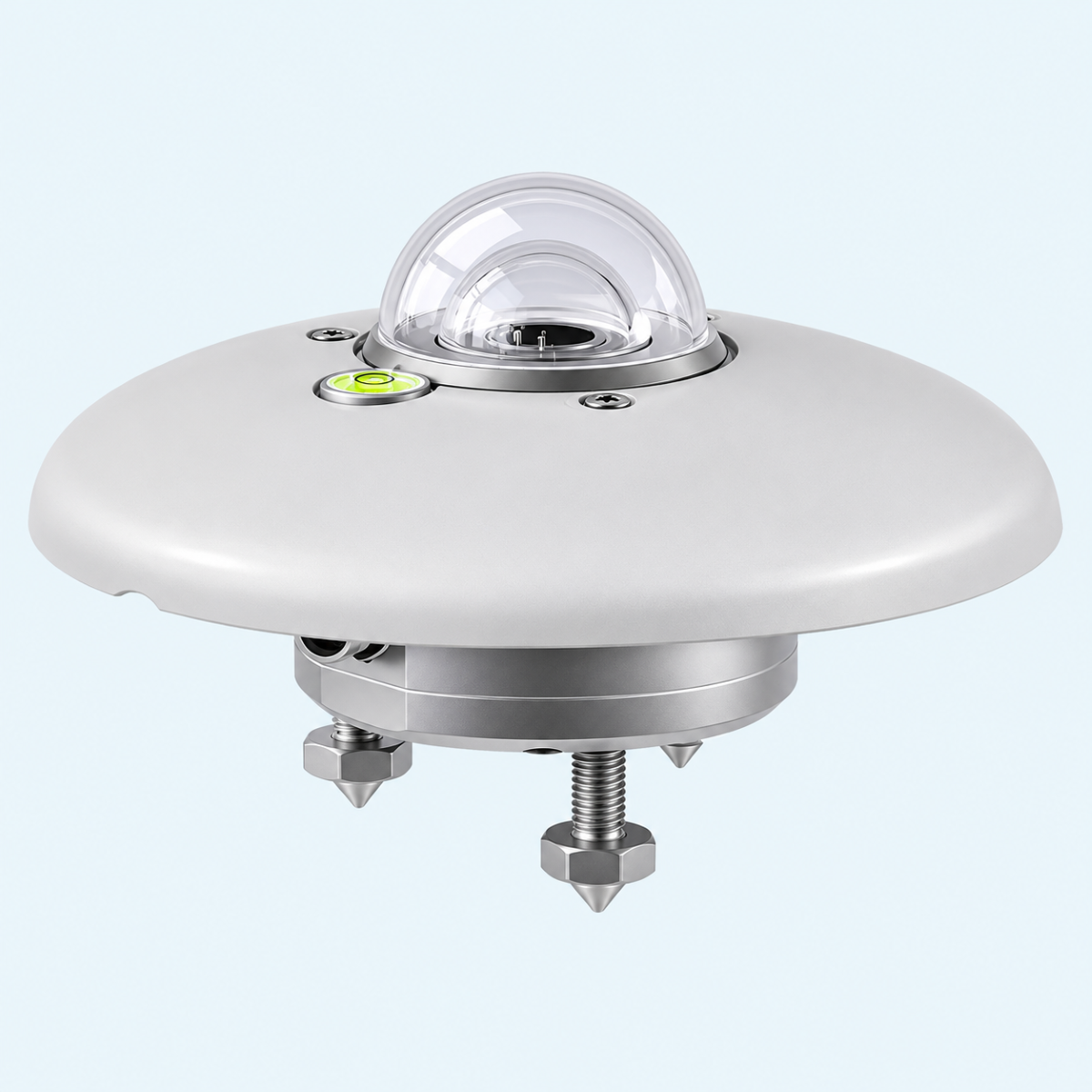
The series offers several output configurations depending on the model, including RS485 Modbus-RTU, configurable analog outputs on LPS02MAx models (4…20 mA, 0…20 mA, 0…1 V, 0…5 V or 0…10 V), 2-wire 4…20 mA and passive mV. LPS02Mxx digital models incorporate internal temperature, relative humidity and pressure sensors for operating condition monitoring, with optional tilt sensing on selected models. The IP67-rated instrument features an anodized aluminium housing, an integrated bubble level and adjustable feet for horizontal positioning. Each pyranometer is factory calibrated according to ISO 9847:2023 (Type A1) and supplied with an individual calibration report.
Typical Applications
Environmental studies and solar radiation monitoring
Meteorological observations and weather monitoring
Solar irradiance measurement for scientific research
Photovoltaic (PV) system performance monitoring
Key Features
Spectrally Flat Class B classification according to ISO 9060:2018
Thermopile sensor for global solar irradiance measurement
Measuring range −200…4000 W/m² with 0.1 W/m² resolution
Spectral range 283…2800 nm
Response time (95%) less than 10 seconds
RS485 Modbus-RTU output on LPS02Mxx models
Configurable 4…20 mA, 0…20 mA, 0…1 V, 0…5 V or 0…10 V analog output on LPS02MAx models
2-wire 4…20 mA output on LPS020C0 and passive mV output on LPS020P0
Internal temperature, relative humidity and pressure diagnostics on LPS02Mxx models
Integrated tilt sensor on LPS02M0T and LPS02MAT models
Integrated bubble level and adjustable feet for horizontal positioning
IP67 protection with anodized aluminium housing, ASA screen and optical glass dome
Operating temperature −40…+80 °C
Factory calibration according to ISO 9847:2023 (Type A1), with an individual calibration report
Benefits
Reliable global solar irradiance measurement with Spectrally Flat Class B performance
Flexible output options for integration with different monitoring systems
Internal diagnostics on digital models support preventive maintenance planning
Easy horizontal installation with integrated bubble level and adjustable feet
Optional tilt monitoring helps detect changes in sensor positioning
Durable IP67 construction supports long-term outdoor monitoring
Factory calibrated with an individual calibration report for measurement confidence
DATAsense software simplifies configuration and real-time monitoring on digital models
Specifications
Measurement | |
|---|---|
Measuring principle | Thermopile |
Classification | Spectrally Flat Class B according to ISO 9060:2018 |
Measured quantity | Global solar irradiance (direct and diffuse irradiance) |
Measuring range | −200…4000 W/m² |
Resolution | 0.1 W/m² |
Typical sensitivity | 6…15 µV/(W/m²) |
Spectral range (50%) | 283…2800 nm |
Viewing angle | 2π sr |
Performance (ISO 9060:2018) | |
|---|---|
Response time (95%) | <10 s |
Zero offset – response to 200 W/m² thermal radiation | Absolute value <10 W/m² |
Zero offset – response to 5 K/h ambient temperature change | Absolute value <4 W/m² |
Total zero offset, including the above effects and other sources | Absolute value <15 W/m² |
Long-term instability (1 year) | Absolute value <1% |
Non-linearity | Absolute value <1% |
Directional response (up to 80° with 1000 W/m² beam) | Absolute value <18 W/m² |
Spectral error | Absolute value <0.5% |
Temperature response (−10…+40 °C) | Absolute value <1.5% |
Tilt response | Absolute value <1% |
Model | Output configuration | Tilt sensor |
|---|---|---|
LPS02M00 | Isolated RS485 Modbus-RTU | No |
LPS02M0T | Isolated RS485 Modbus-RTU | Yes |
LPS02MA0 | Isolated RS485 Modbus-RTU + configurable analog output | No |
LPS02MAT | Isolated RS485 Modbus-RTU + configurable analog output | Yes |
LPS020C0 | 2-wire (current loop) 4…20 mA | No |
LPS020P0 | Passive mV | No |
Configurable Analog Output (LPS02MAx) | |
|---|---|
Default analog output | 4…20 mA |
Alternative current output | 0…20 mA |
Voltage output options | 0…1 V, 0…5 V, 0…10 V |
Default analog irradiance range | 0…2000 W/m² |
Irradiance range configuration | Configurable within the full measuring range |
Output direction | Direct or reversed |
Load resistance – current outputs | ≤500 Ω |
Load resistance – voltage outputs | ≥100 kΩ |
Output type configuration | Via DATAsense software only |
Abnormal measurement indication | Output 10% above full scale when a measurement outside the measuring range is detected (e.g., 22 mA for 4…20 mA or 11 V for 0…10 V) |
Digital Model Electrical (LPS02Mxx) | |
|---|---|
LPS02M0x power supply | 7…30 Vdc |
LPS02MAx power supply – 0…20 mA, 4…20 mA, 0…1 V or 0…5 V output | 10…30 Vdc |
LPS02MAx power supply – 0…10 V output | 15…30 Vdc |
LPS02M0x current consumption | 15 mA at 24 Vdc; 21 mA at 12 Vdc |
LPS02MAx current consumption | 37 mA at 24 Vdc and Iout = 22 mA; 43 mA at 12 Vdc and Iout = 22 mA |
Dedicated 2-Wire Current Loop (LPS020C0) | |
|---|---|
Power supply | 10…30 Vdc |
Load resistance (RL) | ≤500 Ω |
Abnormal measurement indication | Output goes to 22 mA when a measurement outside the measuring range is detected |
Passive mV Output (LPS020P0) | |
|---|---|
External power supply | Not required |
Typical output impedance | <50 Ω |
Typical output signal | Does not exceed a few tens of mV |
Recommended reading instrument resolution | 1 µV |
Internal Diagnostic Sensor (LPS02Mxx) | |
|---|---|
Internal temperature measuring range | −40…+80 °C |
Internal temperature resolution | 0.1 °C |
Internal temperature accuracy | ±0.5 °C (0…60 °C) |
Internal relative humidity measuring range | 0…100% RH |
Internal relative humidity resolution | 0.1% RH |
Internal relative humidity accuracy | ±3% RH at 25 °C (20…80% RH) |
Internal pressure measuring range | 300…1100 hPa |
Internal pressure resolution | 0.1 hPa |
Internal pressure accuracy | ±1 hPa (0…60 °C) |
Operating time monitoring | Built-in days-of-operation counter |
Tilt Sensor (LPS02MxT) | |
|---|---|
Measuring range | 0…180° |
Resolution | 0.1° |
Accuracy | <0.5° |
Mechanical and Construction | |
|---|---|
Housing material | Anodized aluminium |
Protection screen material | ASA |
Dome material | Optical glass |
Weight | Approximately 620 g |
Bubble level accuracy | <0.2° |
Horizontal positioning | Integrated bubble level and adjustable feet |
Electrical connector – LPS02MAx | 8-pole M12 |
Electrical connector – other models | 5-pole M12 |
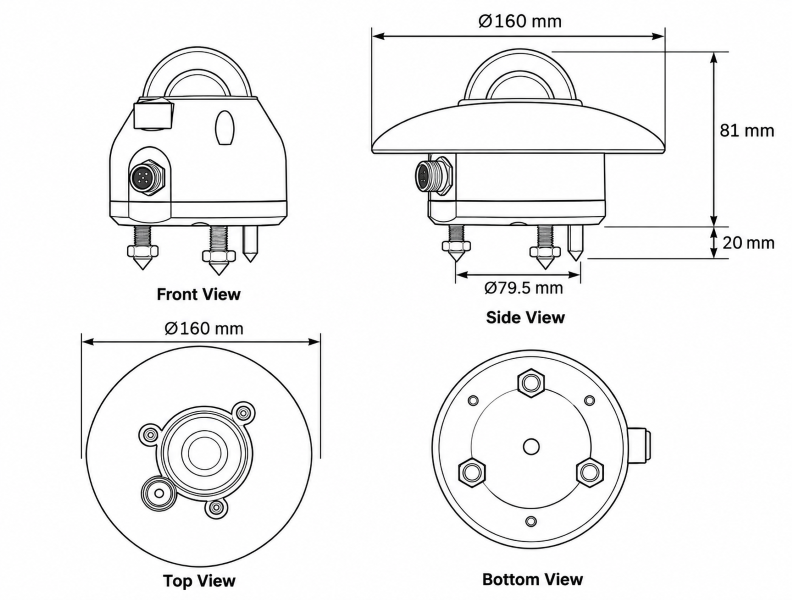
Mechanical Dimensions | |
|---|---|
Overall diameter | Ø160 mm |
Lower mounting-body diameter | Ø79.5 mm |
Environmental | |
|---|---|
Operating temperature | −40…+80 °C |
Operating relative humidity | 0…100% RH |
Maximum operating altitude | 6000 m |
Protection degree | IP67 |
Mean time between failures (MTBF) | >10 years |
Calibration | |
|---|---|
Factory calibration standard | ISO 9847:2023 (Type A1) |
Calibration method | Comparison with a reference pyranometer |
Reference calibration | Reference sample calibrated annually at WRC (World Radiation Center) |
Supplied documentation | Individual calibration report |
Optional certificate | ISO 17025 calibration certificate available upon request |
Digital Communication (LPS02Mxx) | |
|---|---|
Communication protocol | Modbus-RTU |
Modbus address range | 1…247 |
Default Modbus address | 1 |
Supported baud rates | 9600, 19200, 38400, 57600, 115200 bps |
Default baud rate | 19200 bps |
Data bits | 8 (fixed) |
Supported serial formats | 8N1, 8N2, 8E1, 8E2, 8O1, 8O2 |
Default serial format | 8E1 |
Waiting time after Modbus transmission | 3.5 characters (default; protocol-compliant) |
Alternative waiting-time setting | Immediate reception (available, but violates the Modbus protocol) |
Software and Configuration (LPS02Mxx) | |
|---|---|
Configuration software | DATAsense |
Modbus configuration | Address, baud rate, parity and stop bits |
Diagnostic configuration | Alarm thresholds and temperature unit |
Analog output type selection | DATAsense software only (LPS02MAx models) |
Real-time monitoring | Measurement viewing, including graphical irradiance display |
Data recording | Saving measured values to a file |
Additional configuration methods | Proprietary ASCII serial commands; Modbus Holding Registers for communication parameters, alarm thresholds and temperature units |
Drawing
Downloads
| LPS02 Family Datasheet | DownloadLPS02 Family Datasheet |
|---|---|
| LPS02 Family User Manual | DownloadLPS02 Family User Manual |
| LPS02 Family CE Declaration of Conformity | DownloadLPS02 Family CE Declaration of Conformity |
Related Products
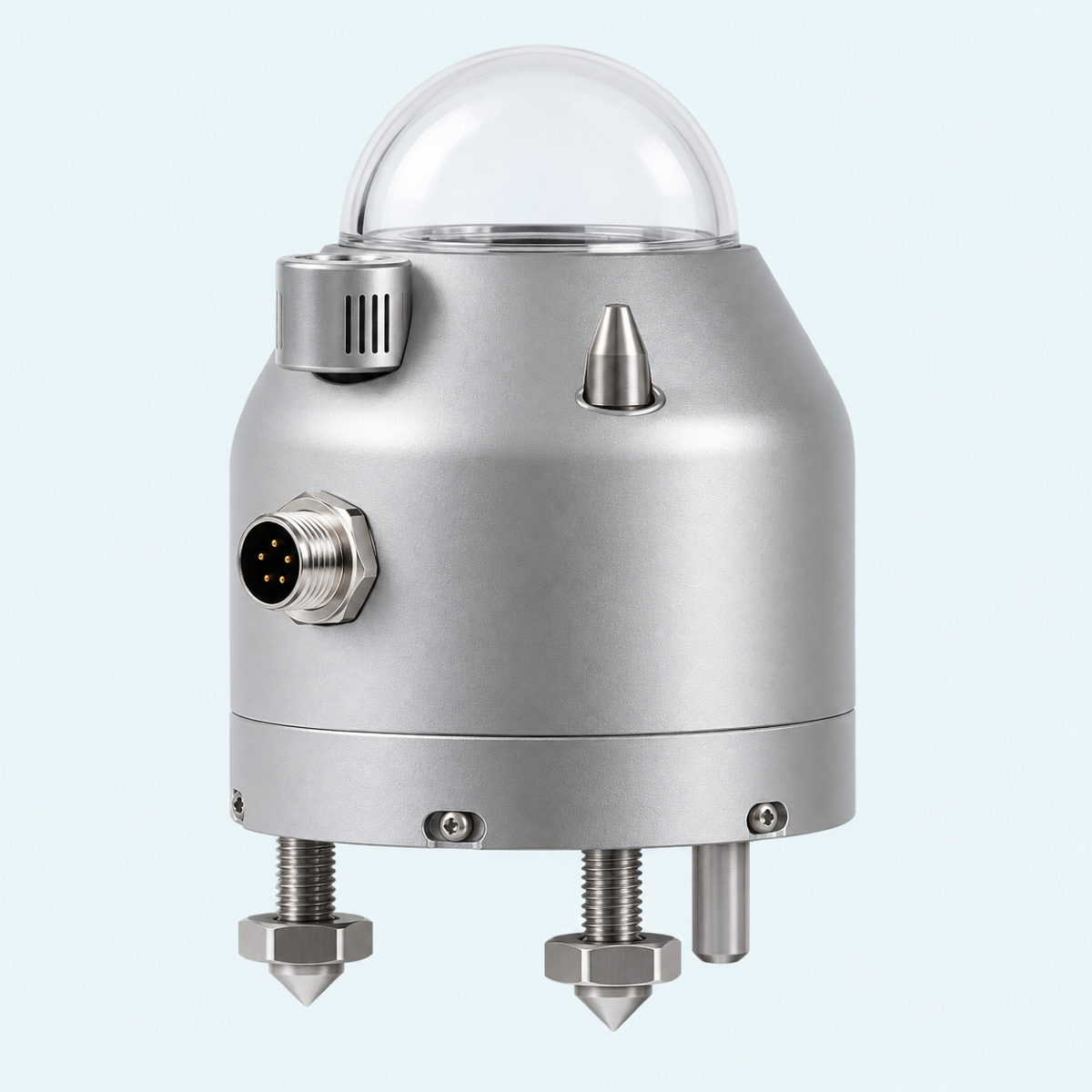
Senseca
LPR10 Class A Pyranometer
Fast Response Spectrally Flat Class A pyranometer for global solar irradiance measurement. Thermopile sensor with
Learn More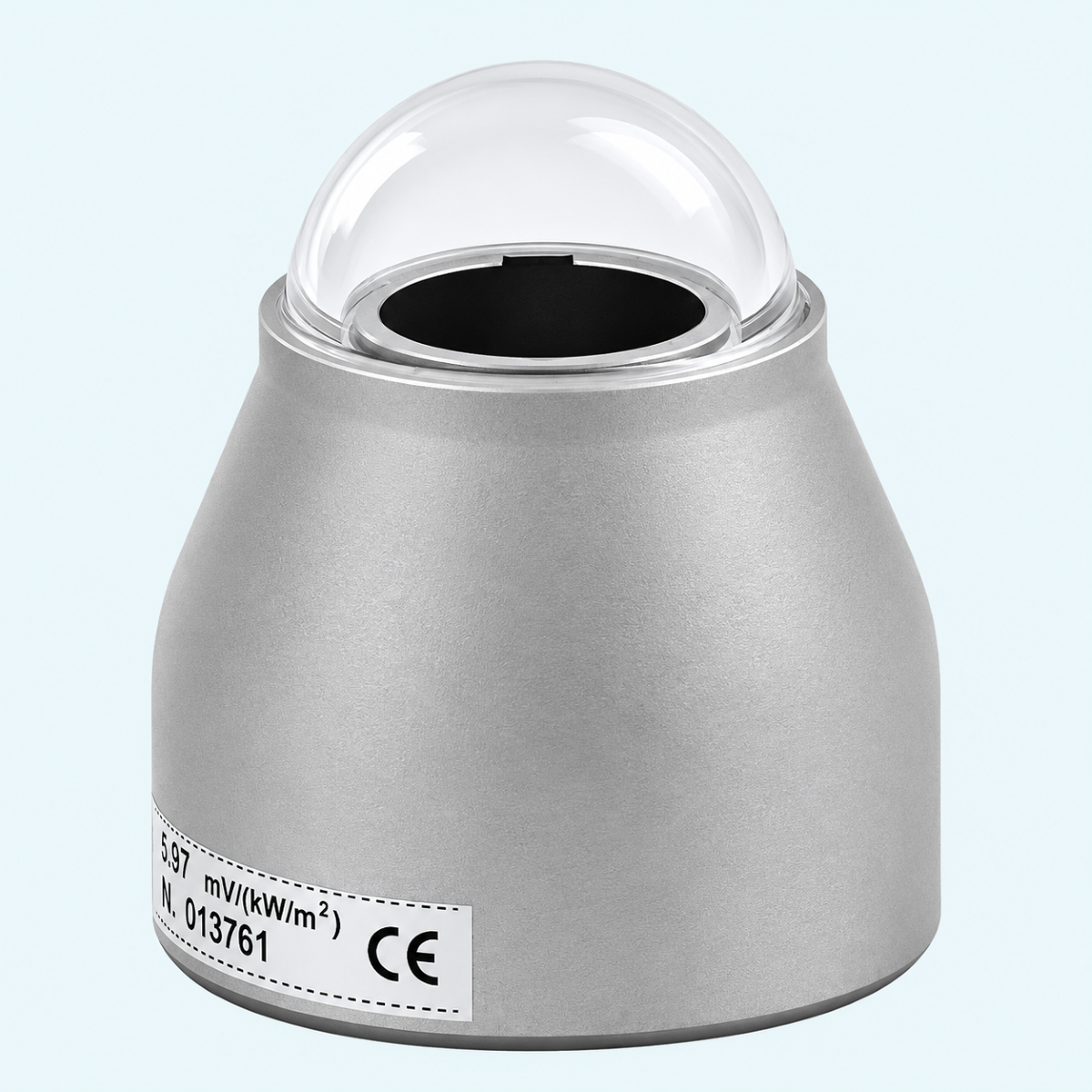
Senseca
LPPYRA-Lite Class C Pyranometer
Compact Class C thermopile pyranometer for PV and solar monitoring.
Learn More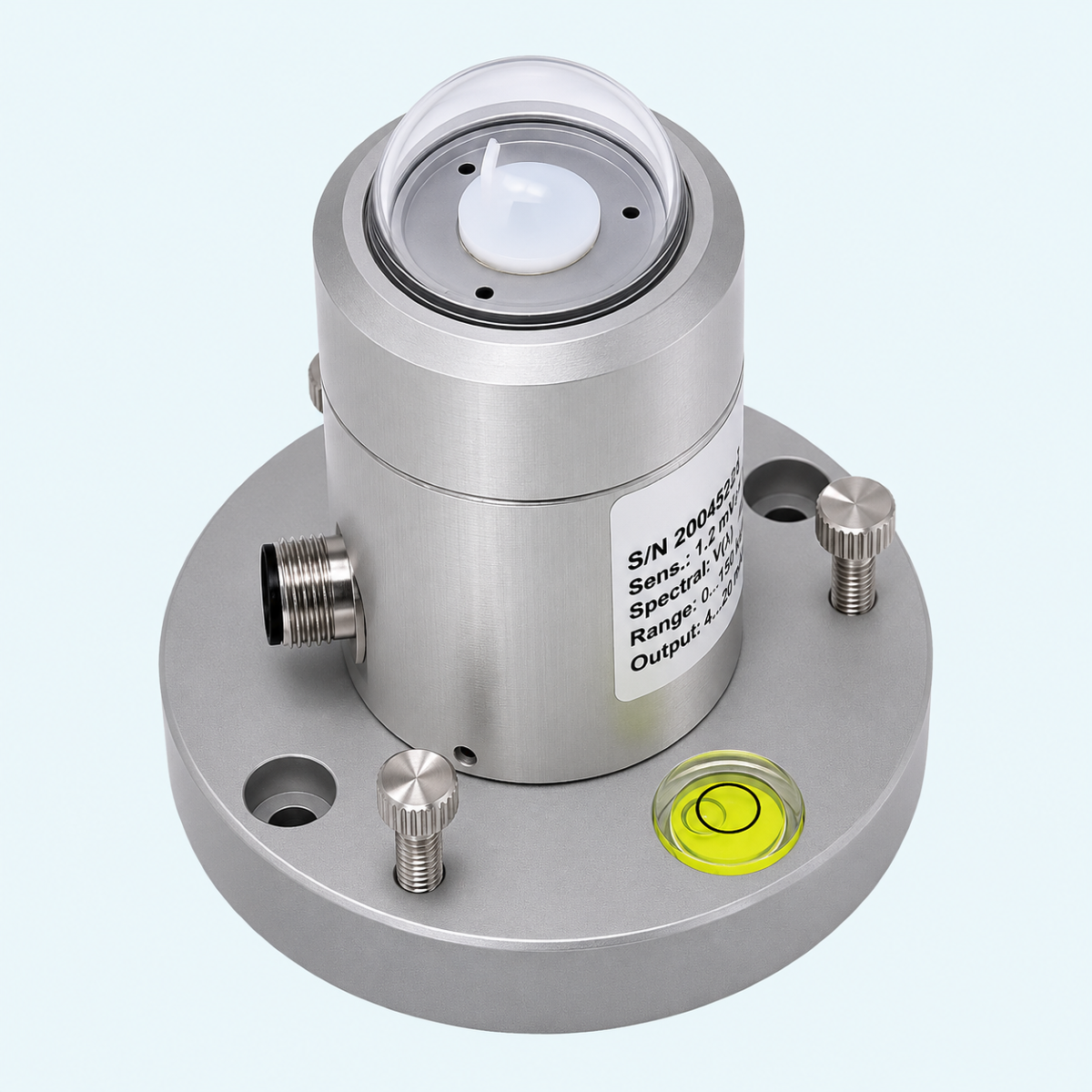
Senseca
LPPHOT03 Photometric Probe
LPPHOT03 outdoor illuminance probe with photopic V(λ) response, cosine correction and individual calibration.
Learn More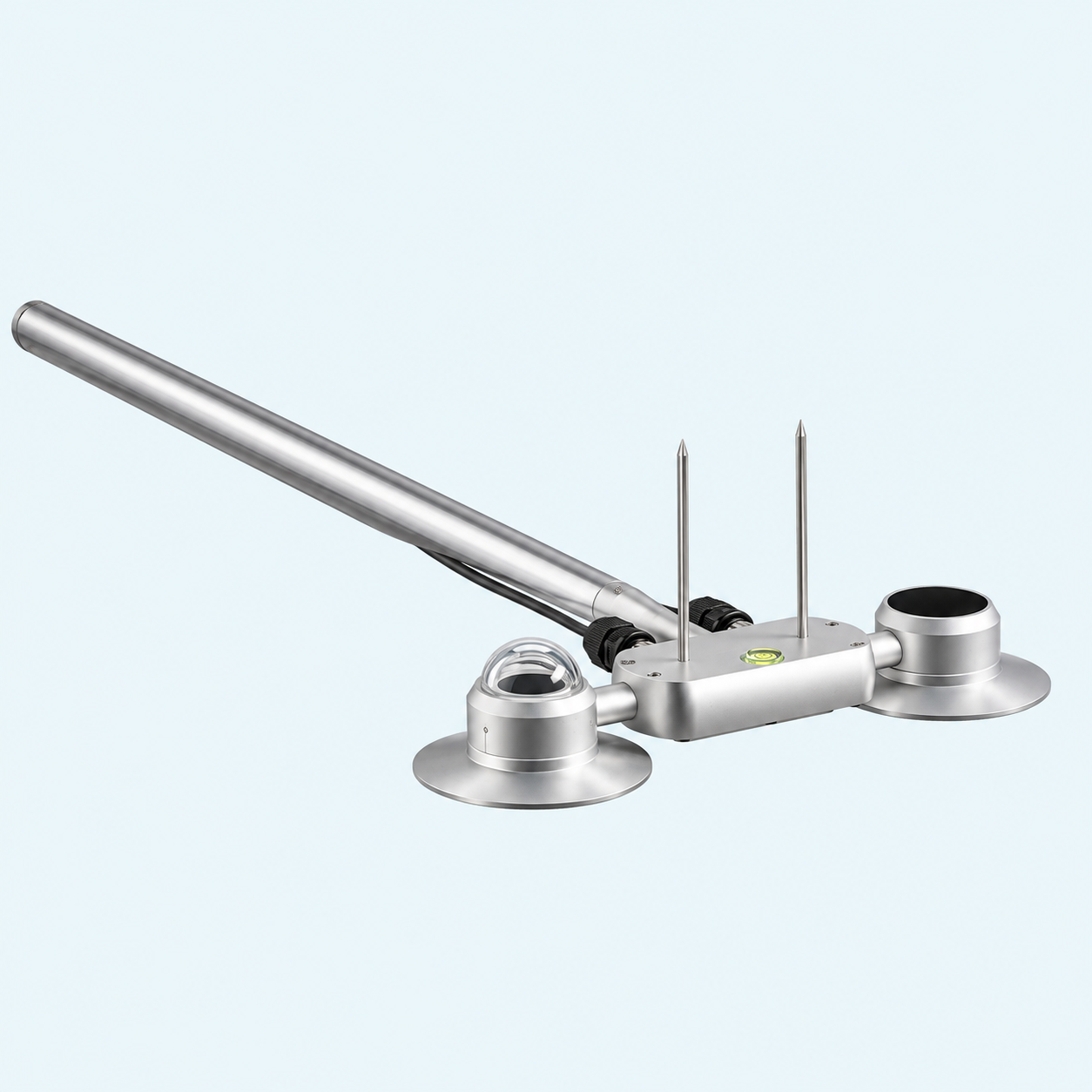
Senseca
LPNET14 4-Component Net Irradiance Meter
Four-component net irradiance meter measuring global and reflected solar radiation plus sky and ground infrared radiation.
Learn More